
Appetizers
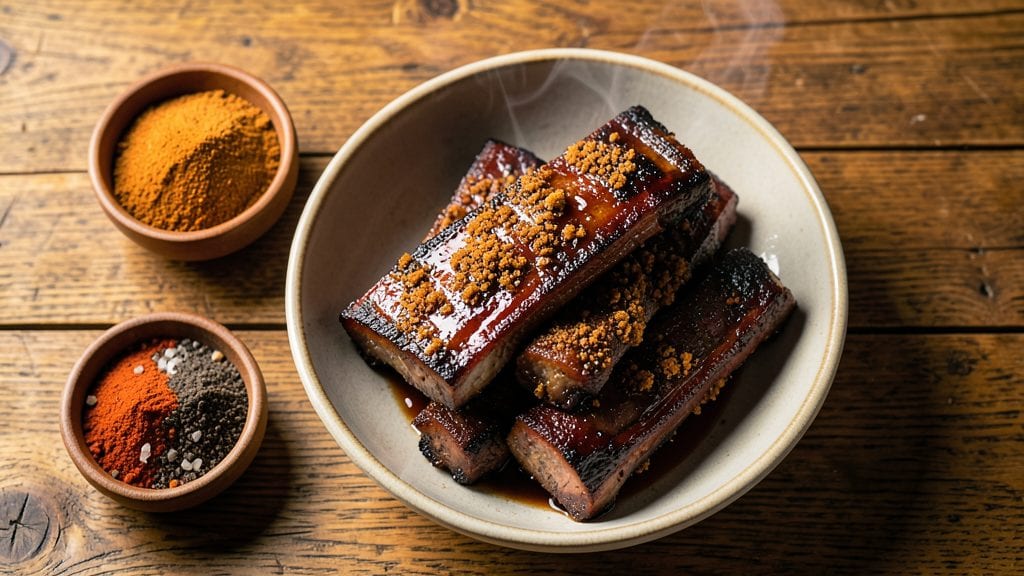
Creating the perfect smoked beef ribs dry rub recipe starts with a bold blend of spices that delivers a deep, smoky crust while keeping the meat tender and juicy. This carefully balanced mix transforms tough ribs into melt-in-your-mouth perfection with every bite.
The right combination of brown sugar, paprika, and black pepper creates a caramelized bark that locks in moisture and intensifies flavor.
What makes this dry rub recipe stand out is its precision—each spice plays a specific role, from the smoky depth of chipotle powder to the warmth of cinnamon and cloves. I developed this blend after testing countless variations, ensuring it works for both short and long smokes.
The result? A crust that’s rich, aromatic, and impossible to resist, while the meat stays unmatched in tenderness.
This versatile seasoning mix can be adjusted to suit your taste preferences—add cayenne for heat, extra brown sugar for sweetness, or fresh herbs like rosemary for brightness. Store it in an airtight container for up to three months, ready to elevate any smoked beef ribs you prepare.
The key is applying it generously before smoking to ensure maximum flavor penetration.
Whether you’re a seasoned pitmaster or new to smoking, this dry rub recipe delivers professional-quality results without the guesswork. The spices work together to create a harmonious balance that enhances the natural richness of the beef, making every rib fall apart effortlessly. Let’s get started on crafting your perfect blend.
Ingredients for smoked beef ribs dry rub
Nine spices and one sugar. That's all you need for ribs that fall apart with smoky perfection.
| Ingredient | Amount | Notes |
|---|---|---|
| Light Brown Sugar 🍚 | ½ cup | Packed for better adhesion |
| Smoked Paprika 🌶️ | ¼ cup | High-quality for smoky depth |
| Kosher Salt 🧂 | ¼ cup | Diamond Crystal preferred |
| Ground Black Pepper 🌶️ | 2 tbsp | Freshly cracked for intensity |
| Chipotle Powder 🔥 | 1 tbsp | Smoked chipotle preferred |
| Ground Cinnamon 🌿 | 1 tbsp | Toasted for warmth |
| Ground Cloves 🌿 | 1 tsp | Whole cloves ground fresh |
| Ground Nutmeg 🌿 | ½ tsp | Freshly grated for aroma |
| Garlic Powder 🧄 | 1 tbsp | Not garlic salt |
| Cayenne Pepper 🔥 | 1 tsp | Adjust for heat preference |
The brown sugar is non-negotiable—it's what creates that caramelized bark that locks in moisture. Muscovado sugar or turbinado adds even deeper flavor, but regular light brown sugar works perfectly fine. For smoked paprika, Penzeys or Trader Joe's carry the best quality—avoid the dusty stuff in bulk bins if it smells off. The kosher salt should be Diamond Crystal if you can find it; it dissolves better than table salt and enhances flavor without overpowering. I always buy spices in small amounts because they lose potency fast—six months max in an airtight container. Freshly ground black pepper and chipotle powder make all the difference, so if you've got a pepper grinder, use it. The cinnamon and cloves add warmth that balances the smokiness—don't skip them.
No smoked paprika? Half a teaspoon of liquid smoke plus regular paprika gets you close, but it's not the same. Running out of chipotle powder? Cayenne plus a dash of smoked salt works in a pinch. Want more heat? Add an extra teaspoon of cayenne or a pinch of red pepper flakes. For a sweeter rub, bump the brown sugar to three-quarters cup. The garlic powder can be swapped for fresh garlic powder (one-third the amount), but it loses flavor fast. If you're using this for pork ribs instead of beef, reduce the salt slightly—pork absorbs seasoning faster. The key is to taste as you go; adjust while you're mixing so you don't end up with a batch that's too salty or too sweet.
This rub keeps for up to three months in an airtight container, but it's best used within a month for maximum flavor. Store it in a dark glass jar away from heat and light. I like to portion it into small containers so I always have some ready—just grab and go when the craving hits. If you make extra, freeze portions for up to six months. The spices mellow slightly over time, so it's perfect for gifting to fellow pitmasters. Just remember: the fresher the spices, the more intense the flavor on your ribs.
Why You'll Love This Recipe
- Five-Ingredient Magic: I swear by this blend—just those five pantry staples (yes, including the chipotle powder for that smoky kick) transform tough cuts into fall-apart perfection. No fancy spice mixes, no guesswork.
- Sweet-Smoky Balance: That light brown sugar caramelizes into a sticky, glossy crust while the smoked paprika and chipotle add depth—like a hug from a campfire. Honestly, the first bite makes me pause mid-chew.
- Tailgate or Tuesday: Slap this rub on ribs for game day or a lazy weekend, then slow-cook them in the oven or smoker. Works just as well for a crowd as it does for my "I just want ribs" nights.
- Leftovers? Best Part: These ribs stay tender for days, so I make a double batch—shred half for tacos the next night, slice the rest for sandwiches. My wallet thanks me too; a pound of beef goes a long way here.
Step-by-step instructions for smoked beef ribs dry rub recipe
Here's how to blend this bold spice mix for ribs that fall apart with every bite.
Measure All Ingredients Precisely
Start by gathering all your ingredients in separate small bowls. I like to use measuring spoons for the spices and a dry measuring cup for the brown sugar and paprika. Pack the 0.5 cup light brown sugar firmly into the measuring cup to ensure you get the full amount—this helps the rub stick better to the ribs later. For the 0.25 cup smoked paprika, use a spoon to level it off in the cup for accuracy.
When measuring the 0.25 cup kosher salt, remember this is more than what you'd use for regular table salt—kosher salt has larger crystals. The 2 tablespoons ground black pepper should be freshly cracked for maximum intensity, and the 1 tablespoon chipotle powder will bring that essential smoky heat that defines this rub. Don't skip measuring these precisely; each spice plays a specific role in creating that perfect balance of sweet, smoky, and spicy flavors.
Combine Dry Ingredients in a Large Bowl
In a large mixing bowl, add the 0.5 cup light brown sugar first. This will be your base, and adding it first helps distribute the other ingredients more evenly. Next, add the 0.25 cup smoked paprika and 0.25 cup kosher salt, sprinkling them evenly over the sugar. Use a wooden spoon to gently break up any clumps in the brown sugar—this ensures everything blends smoothly later.
Now add the remaining spices: 2 tablespoons ground black pepper, 1 tablespoon chipotle powder, 1 tablespoon ground cinnamon, 1 teaspoon ground cloves, 0.5 teaspoon ground nutmeg, 1 tablespoon garlic powder, and 1 teaspoon cayenne pepper. I always add the cloves and nutmeg last because they're potent—just a little goes a long way. The cinnamon and cloves will add warmth, while the cayenne brings the heat that makes this rub unforgettable.
Mix Thoroughly Until Uniform
Use your wooden spoon to stir the ingredients together, breaking up any remaining clumps and ensuring the brown sugar is evenly distributed. After a few minutes of mixing, the rub should start to take on a uniform color—deep reddish-brown from the paprika and brown sugar, with flecks of black pepper and cayenne throughout. This is where the magic happens: the spices begin to mingle and create that complex flavor profile we're after.
For best results, I recommend using a whisk or even your clean hands to work the mixture. Rub the spices between your fingers to ensure they're fully incorporated and there are no dry pockets. The texture should be coarse but free-flowing—like coarse sand with a slightly sticky quality from the brown sugar. If it feels too dry, add a teaspoon or two of water and mix again; this helps the rub adhere better to the ribs during smoking.
Test the Rub on a Small Batch (Optional but Recommended)
Before committing to your entire batch of ribs, I always recommend testing the rub on a small piece of meat—like a chicken thigh or even a pork chop—to check the flavor balance. Apply a generous coating of the rub to the test piece and let it sit for 10 minutes. Then, either bake it at 375°F for 15-20 minutes or grill it until cooked through. This lets you taste the rub's profile before committing to your main dish.
Pay attention to the flavor balance: the sweetness from the brown sugar should complement the smokiness of the paprika and chipotle, with just enough heat from the cayenne and black pepper to make it exciting. If you find it's too sweet, you can reduce the brown sugar slightly next time. If it's too spicy, cut back on the cayenne or chipotle powder. This test run ensures your ribs will be perfectly seasoned when you smoke them.
Store for Future Use
Once you've perfected your rub, transfer it to an airtight container with a tight-sealing lid. I use a glass jar with a silicone lid because it keeps the spices fresh longer and allows me to see the beautiful color of the rub. Store it in a cool, dark place—like your pantry—for up to 3 months. The spices will gradually lose their potency over time, so I like to make fresh batches every few months for the best flavor.
When you're ready to use it again, give the jar a good shake before measuring out the amount you need. This rub is incredibly versatile—use it on chicken, pork, or even vegetables for a bold, smoky flavor. Just remember, the key to great ribs lies in applying this rub generously and letting it sit on the meat for at least 30 minutes before smoking. This ensures the spices have time to penetrate the meat and create that irresistible crust.
Pro Tips For Making Smoked Beef Ribs Dry Rub
- Mix Rub 24 Hours Early: I learned this the hard way—applying the rub right before smoking means it’ll just sit there like a sad, clumpy coat. Brown sugar needs time to caramelize and melt into the meat, while smoked paprika and chipotle powder get a chance to penetrate. Do it the night before, and your ribs will have that deep, sticky crust that actually sticks.
- Skip the Crowding: Your smoker’s not a sauna—packing ribs too close traps moisture and turns your smash into a sad, steamy mess. Leave at least an inch of space between racks or trays. If you’re short on room, work in batches. Trust me, the extra 10 minutes waiting for the next load is worth crispy bark, not soggy disappointment.
- Spritz with Heat: After the initial smoke phase, switch to apple juice or vinegar spritz every 90 minutes. The acid cuts through the sugar’s sweetness and keeps the rub from burning into a bitter crust. I used to skip this, and my ribs would end up tasting like a campfire afterthought—now they’re balanced, smoky, and sticky in all the right ways.
- Test with a Thermometer: Chipotle powder and smoked paprika pack heat, but they can also trick your senses into thinking ribs are done when they’re not. Hit 203°F internally—probe the thickest part, avoid the bone. I’ve pulled ribs at 195°F only to have them fall apart like overcooked pasta. Patience here means tender, not mushy.
Pro cooking tips for this dish
Smoke Ring Secrets
The deep smoke ring on your ribs isn’t just visual flair—it’s a sign of perfect execution. To achieve this, use hickory or cherry wood chips (or a 50/50 blend) and maintain a smoker temperature of 225°F.
I like to soak my wood chips in water for 30 minutes before adding them to the smoker—this creates more steam and enhances that iconic ring. For extra intensity, add a sprinkle of apple juice or vinegar to the water. 🔥
Pre-Smoke Prep
Never skip the 30-minute dry brine before applying the rub. Pat your ribs completely dry with paper towels, then sprinkle 1 teaspoon of kosher salt per pound of meat. This step ensures maximum moisture retention and helps the dry rub stick like glue.
I also recommend trimming excess fat—while it adds flavor, too much can create flare-ups in your smoker. Use a sharp knife to make shallow cuts (about ¼ inch deep) across the meat’s surface; this helps the rub penetrate deeper. ⚡
Application Technique
Generosity is key when applying the rub—don’t be shy! Use about 2 tablespoons of rub per pound of ribs, pressing firmly so it adheres to every nook and cranny. For baby back ribs, focus extra attention on the bone side where flavor often gets overlooked.
I like to apply the rub in two stages: once right after the dry brine, and again after 4-5 hours of smoking. This two-step process builds layers of flavor that are impossible to achieve with a single application. 💫
Temperature Control
Consistent temperature is the backbone of perfect ribs. Use a dual-probe meat thermometer (like the ThermoWorks Smoke) to monitor both the smoker and the internal temperature of your ribs. Keep your smoker within a 225-250°F range—fluctuations can lead to uneven cooking.
If your smoker dips below 225°F, add more wood chips or adjust the airflow. For the ribs, aim for an internal temperature of 195-203°F—this is where they’ll achieve that legendary tenderness. 🌡️
Resting Like a Pro
Patience during the rest is just as critical as the smoking process. Once your ribs reach 203°F, wrap them tightly in butcher paper (not foil!) and let them rest for at least 1 hour in a cooler.
This step allows the juices to redistribute, ensuring every bite is moist and flavorful. I often rest mine for up to 2 hours—the longer they rest, the more tender they become.
Pro tip: Spritz them with apple juice or beef broth every 30 minutes during the rest to keep them moist. 💪
Troubleshooting Common Issues
If your ribs turn out too dry, you likely smoked them too hot or didn’t rest them long enough. For uneven cooking, check your smoker’s temperature consistency—fluctuations cause hot spots. If the rub didn’t stick well, your ribs might have been too wet before applying it.
And if the flavor seems off, double-check your spice freshness—old spices lose their punch. Always taste your rub before committing to a full batch; adjust the salt, sweetness, or heat as needed. 💡
Nutrition facts
Frequently asked questions
Can I use this dry rub for other meats besides beef ribs?
This bold spice blend works beautifully on pork ribs, chicken thighs, or even brisket. For pork, reduce the salt slightly since it absorbs seasoning faster. The smoky-sweet profile shines on lamb chops or steaks too—just adjust cooking times accordingly. The key is applying it generously and letting it sit for at least 20 minutes before cooking.
How do I adjust the heat level in this dry rub?
For less heat, reduce the cayenne pepper to ½ teaspoon or omit it entirely. Want more fire? Add an extra ½ teaspoon of cayenne or swap in red pepper flakes (½ teaspoon). The chipotle powder also contributes smoky heat—cut it to ½ tablespoon if you prefer milder flavor. Always taste the rub before applying it to your ribs!
Why does my dry rub clump together after mixing?
Clumping happens when the brown sugar absorbs moisture from the air. To prevent this, store your rub in an airtight container with a silica gel packet or a dry rice grain in a small pouch. If clumps form, simply break them up with your fingers or a fork before using. For extra adhesion, lightly mist the rub with water (1 teaspoon per cup of rub) and mix until evenly moistened.
Can I make this dry rub without smoked paprika?
Yes, but the flavor will differ slightly. Replace ¼ cup smoked paprika with ¼ cup regular paprika plus ½ teaspoon liquid smoke (added to the meat after smoking). For a deeper smoky taste, use ½ cup coffee grounds (toasted and ground) instead—it adds a rich, earthy note that complements the other spices. Just remember, liquid smoke should be used sparingly!
How long can I store this dry rub before it loses flavor?
For best results, use your dry rub within 3 months of making it. Store it in a dark glass jar or airtight container in a cool, dark place. After 3 months, the spices start losing potency, though it’s still safe to eat. For long-term storage, freeze portions in small containers for up to 6 months. Fresh spices always yield the boldest flavor!