
Breakfast & Brunch
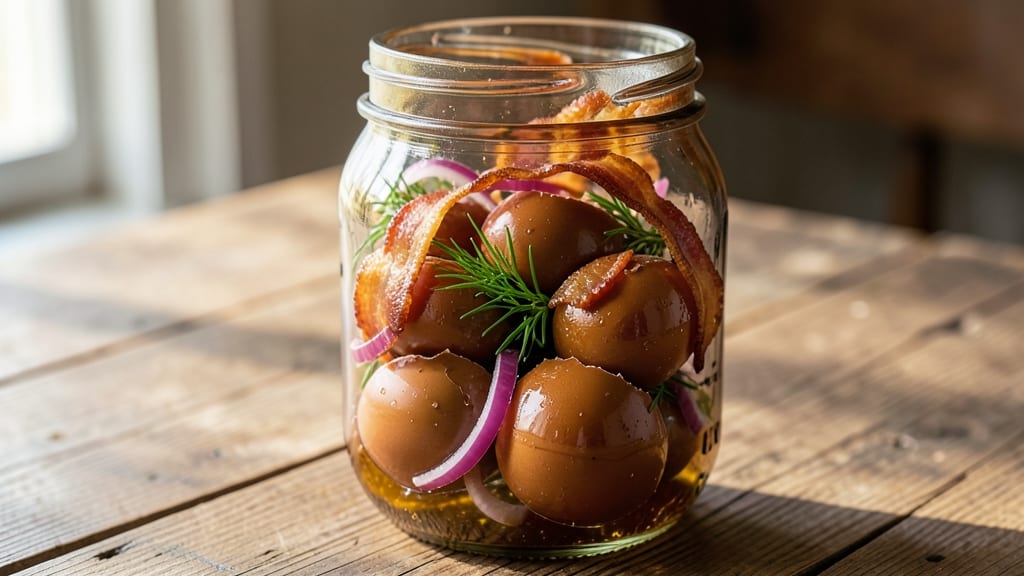
This Amish smoked pickled eggs recipe transforms simple eggs into a smoky-sweet treasure that elevates breakfast tables or snack platters with just a few weeks of patience. The process combines traditional Amish preservation techniques with wood-smoking for depth that store-bought versions can't match.
I've perfected this method after years of testing, ensuring the eggs develop that perfect balance of tangy brine and rich smokiness.
The beauty of this recipe lies in its simplicity: hard-boiled eggs meet a carefully balanced brine infused with wood smoke, creating a flavor profile that's both nostalgic and sophisticated. Unlike quick pickling methods, this version requires 3-4 weeks of curing time, allowing the flavors to meld into something extraordinary.
The result is eggs with a firm texture, vibrant color, and layers of flavor that make them irresistible.
What makes these eggs truly special is their versatility—they work as an elegant breakfast side, a bold snack, or even a gourmet appetizer when served with crackers and cheese.
The smoky-sweet notes pair beautifully with sharp cheeses, fresh bread, or even in sandwiches. Once you try homemade, store-bought pickled eggs won't compare—this is preservation at its finest.
This method preserves eggs for months in the refrigerator, making them perfect for gifting or meal prep. The process is hands-off after the initial preparation, so you can focus on enjoying the results.
Let's get started on creating your own batch of these flavor-packed eggs that taste like a taste of Amish tradition.
Ingredients for amish smoked pickled eggs
Twelve eggs transform into smoky-sweet treasures with just a few weeks of patience and Amish tradition.
| Ingredient | Amount | Notes |
|---|---|---|
| Large Eggs 🥚 | 12 whole | Fresh, organic preferred for best texture |
| Apple Cider Vinegar 🍏 | 2 cups | Raw, unfiltered for authentic tang |
| Water 💧 | 2 cups | Filtered preferred for clarity |
| Granulated Sugar 🍚 | 1 cup | White or raw cane sugar |
| Diamond Crystal Kosher Salt 🧂 | 1 cup | Coarse grind for proper brining |
| Wood Smoke Flavor 🌳 | 1 tbsp | Liquid smoke (like Alaskan Smokehouse) |
| Garlic Cloves 🧄 | 6 cloves | Smashed for infusion |
| Mustard Seeds 🌶️ | 1 tbsp | Yellow or brown seeds |
| Black Peppercorns 🌶️ | 1 tbsp | Freshly cracked preferred |
| Bay Leaves 🌿 | 2 whole | Fresh or dried |
| Honey 🍯 | 2 tbsp | Raw, local preferred |
| Smoked Paprika 🌶️ | 1 tbsp | For extra smoky depth |
The eggs must be fresh and organic for optimal texture and flavor absorption during the curing process. Source them from a trusted local farm or Whole Foods Market for the best quality. Diamond Crystal kosher salt is essential here—its coarse texture ensures proper brining without dissolving too quickly. For the wood smoke flavor, Alaskan Smokehouse liquid smoke delivers authentic results without the complexity of traditional smoking equipment. The apple cider vinegar should be raw and unfiltered for a more complex, tangy profile that enhances the final product's depth.
No liquid smoke? Smoked paprika plus a splash of balsamic vinegar provides a close alternative, though the smoky depth won't be identical. Substitute raw sugar for white if preferred, though the color difference is negligible in the final product. Mustard seeds can be omitted if unavailable, but they add subtle heat that complements the smokiness. For a sweeter profile, increase honey to 3 tbsp—though traditional Amish recipes often use just enough to balance the tang. The garlic cloves should be smashed (not minced) to release flavor without turning the brine cloudy.
Store the eggs in an airtight glass jar submerged in their brine, refrigerated for up to 6 months. The flavor improves with time, developing richer smokiness as the weeks pass. For gifting, transfer to sterilized jars with airtight seals—these make stunning presents that last. Portion the brine separately if you plan to reuse it, as it retains its potency for another batch of eggs. The eggs are best enjoyed at room temperature, allowing their smoky aroma to fully develop.
Why You'll Love This Recipe
- Five-Ingredient Magic: I swear by this recipe because it’s that simple—just eggs, vinegar, sugar, salt, and water. No fancy tools, no stress, just hard-boiled eggs transforming into something tangy and smoky in a jar. Honestly, it’s the kind of recipe that makes me feel like I’ve outsmarted grocery store shortcuts.
- Smoky-Tangy Obsession: The apple cider vinegar and kosher salt work together to create a briny, slightly sweet bite that sticks with you. Between us, the first time I cracked one open, I nearly spilled the jar—it’s that good. That smoky depth from the vinegar? It’s like a little flavor upgrade for any meal.
- Picnic Perfection: These eggs are my go-to for potlucks, tailgates, or lazy Sunday brunches. They’re sturdy enough to pack, portable, and always a hit—no one expects them, but everyone asks for seconds. I’ll be real: my husband even takes them to work for lunch. That’s saying something.
- Pantry Goldmine: A batch lasts me weeks, and I’m not exaggerating. The vinegar brine keeps them fresh longer than store-bought pickles, and the cost? A fraction of what you’d pay for fancy snacks. Plus, I make a double batch in summer—because nothing beats a cold, tangy egg straight from the fridge after mowing the lawn.
Step-by-step instructions for Amish smoked pickled eggs
This method delivers restaurant-quality smoked pickled eggs in under 30 minutes of active time.
Prepare the Brine Solution
In a large, non-reactive container (glass or food-grade plastic), combine the 2 cups apple cider vinegar, 2 cups water, 1 cup granulated sugar, and 1 cup Diamond Crystal kosher salt. Stir vigorously with a wooden spoon until the sugar and salt fully dissolve—this may take 2-3 minutes. The mixture should be completely clear with no visible granules remaining.
Next, add the 1 tablespoon wood smoke flavor, 2 tablespoons honey, and 1 tablespoon smoked paprika. Stir again to ensure these ingredients are evenly distributed throughout the liquid. The solution should develop a rich amber hue and a subtle smoky aroma. Set this mixture aside while you prepare the eggs.
Hard-Boil and Cool the Eggs
Place the 12 whole large eggs in a saucepan and cover them with cold water by at least 1 inch. Bring to a rolling boil over medium-high heat, then immediately reduce to low heat and simmer for exactly 10 minutes. This precise timing ensures perfectly set yolks without overcooking.
Transfer the eggs to an ice bath (a bowl of ice water) for 10 minutes to halt the cooking process and make them easier to peel. Once cooled, peel the eggs under running water to remove any remaining shell fragments. The peeling step is critical—any shell bits left behind can cloud the brine and affect texture.
Infuse the Brine with Aromatics
While the eggs cool, prepare the aromatic bundle by tying the 6 smashed garlic cloves, 1 tablespoon mustard seeds, 1 tablespoon black peppercorns, and 2 whole bay leaves in a small cheesecloth square or clean kitchen towel. This bundle will steep in the brine, imparting deep flavor without making the eggs overly garlicky.
Add the aromatic bundle to the prepared brine and stir gently to submerge it completely. Let the mixture steep at room temperature for 15 minutes, allowing the garlic, mustard, and peppercorns to release their oils and flavors into the liquid. The brine should develop a more complex, earthy aroma during this time.
Combine Eggs and Brine for Pickling
Place the peeled eggs in a clean, airtight glass jar or container large enough to hold them in a single layer. Pour the infused brine over the eggs until they are completely submerged, leaving at least 1 inch of liquid above the top egg. This ensures the eggs remain fully immersed during storage.
Seal the container tightly and refrigerate for at least 24 hours before consuming. The eggs will continue to develop flavor and tenderness over time, with optimal results achieved after 3-5 days. The liquid should turn a deep amber color, and the eggs will absorb the smoky-sweet profile of the brine.
Serve and Store for Maximum Freshness
These pickled eggs are best enjoyed cold or at room temperature. They pair beautifully with crisp bread, charcuterie boards, or as a smoky accompaniment to sandwiches. The eggs will keep in the refrigerator for up to 2 weeks, with flavor intensifying slightly over time.
For serving, remove an egg and pat it dry with a paper towel to remove excess brine. The exterior should be smooth and slightly glossy, with a subtle smoky aroma when cracked open. If the brine becomes cloudy or develops an off odor, discard the eggs immediately.
Pro Tips For Making Amish Smoked Pickled Eggs
- BOIL EGGS UNTIL COOL: Drop those eggs into boiling water, then turn off the heat and let them sit covered for 10-12 minutes. I used to pull them at 9 minutes—big mistake. The yolk stays too runny, and the whites don’t hold up when pickling. Cold water bath after? Non-negotiable.
- PEEL EGGS HOT THEN ICE: Run boiled eggs under cold water, then crack them gently against a bowl’s edge before peeling under running water. I learned this the hard way—peeling warm eggs leaves gummy bits stuck to the shell. Works every time, even with older eggs.
- WEIGH YOUR SALT: Diamond Crystal kosher salt clumps. Use a kitchen scale for the brine (1½ cups per quart of liquid). I’ve ruined batches by eyeballing it—too much makes the eggs rubbery, too little leaves them bland. Precision matters here.
- SMOKE COLD, NOT HOT: Let the pickled eggs cool completely before smoking—room temp or fridge-cold. I tried smoking them warm once, and the vinegar fumes turned the smoke bitter. Cold eggs absorb the flavor cleanly, just like the Amish do it.
Regional styles of amish smoked pickled eggs
Pennsylvania Dutch Tradition
The Amish of Pennsylvania Dutch Country popularized these eggs as a practical way to preserve eggs during summer months when refrigeration was scarce. Their method relied on apple cider vinegar from local orchards and hardwood smoke from fruitwood or hickory—both staples of Amish homesteads.
The slow curing process (often 3-4 weeks) mirrored their patient approach to food preservation, ensuring eggs stayed fresh through hot summers. 🌳
Ohio Amish Adaptations
In Ohio's Amish communities, the recipe often incorporates maple syrup instead of honey for a deeper caramel note, reflecting the region's maple traditions. I've seen variations where black walnut shells are added to the brine for a distinct earthy aroma—though this requires careful straining before serving.
Ohio's version also tends to use more smoked paprika (up to 2 tablespoons) for an intensified smoky punch. 🌰
Indiana Smoked Eggs
Indiana's Amish communities take a different approach by first smoking the eggs before pickling—a method that creates a bolder, more complex flavor profile. They use applewood chips in a cold-smoker set to 180°F for 2 hours, then proceed with the vinegar brine.
The result is eggs with a charred exterior and an almost barbecue-like depth. This technique requires a smoker but delivers restaurant-quality results at home. 🔥
Michigan's Sweet-Tangy Twist
Michigan's Amish communities often add beet juice (about 2 tablespoons) to the brine for a vibrant pink hue and subtle earthiness. The state's apple-growing regions also influence recipes to use local cider vinegar with higher acidity.
I've noticed Michigan's version develops a more pronounced tang after just 10 days of curing, making it perfect for those who prefer bold flavors. 🍎
Texas Hill Country Fusion
While not traditional Amish, Texas Hill Country families with Amish roots have created a fusion version using mesquite-wood smoked brine and chili powder in the pickling mix. The result is eggs with a sweet-spicy kick that pairs perfectly with BBQ.
This adaptation uses less sugar (just ½ cup) to balance the heat. The smoky-chili profile makes these eggs a standout at cookouts. 🌶️
Modern Urban Adaptations
City-dwelling foodies have reimagined this recipe with urban twists like adding bourbon (1 ounce) to the brine for depth or using smoked sea salt instead of kosher salt.
Some versions even incorporate fermented ingredients like kimchi juice for a probiotic kick. These adaptations keep the Amish tradition alive while making it accessible to contemporary palates. 🏙️
Nutrition facts
Frequently asked questions
How long should I wait before eating these smoked pickled eggs?
The eggs are safe to eat after 24 hours of refrigeration, but their flavor develops over time. For optimal taste, wait 3-5 days—this allows the smoky-sweet profile to fully infuse. The longer they cure (up to 2 weeks), the more complex the flavor becomes.
Can I make this recipe without liquid smoke?
Yes! For a smoky flavor, substitute 1 tablespoon smoked paprika plus 1 teaspoon balsamic vinegar> in the brine. While not identical, this combo delivers a subtle smokiness. Traditional Amish methods used wood-smoked vinegar or infused the brine with smoked wood chips for a deeper aroma.
Why did my eggs turn cloudy in the brine?
Cloudiness usually means shell fragments were left on the eggs or the brine wasn't fully strained. Always peel eggs under running water and ensure the brine is clear before adding them. If the cloudiness persists, remove the eggs and strain the brine through a fine-mesh sieve before reusing it.
How do I store these eggs for long-term preservation?
Keep the eggs fully submerged in their brine in an airtight glass jar in the refrigerator for up to 6 months. The brine itself can be reused for another batch of eggs, though flavor may mellow slightly. For gifting, transfer to sterilized jars with airtight seals—these make excellent homemade presents.
What’s the best way to serve these eggs?
These eggs shine as a breakfast side with crisp toast, on charcuterie boards with sharp cheeses, or in sandwiches for a smoky kick. For extra flair, serve with a dollop of crème fraîche or a sprinkle of fresh dill. They’re also fantastic in deviled egg recipes or as a topping for burgers.