
Desserts
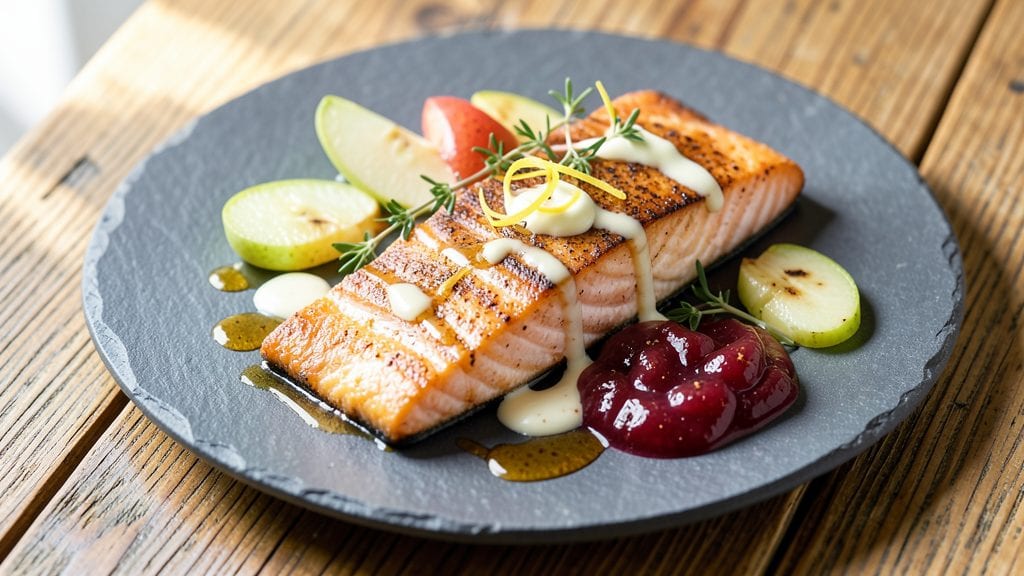
This apple salmon recipe transforms a classic protein into a restaurant-worthy dish where sweet caramelized apples meet perfectly flaky salmon. The secret lies in balancing tart apple glaze with rich salmon flavor, creating a harmony that feels both elegant and approachable.
I developed this technique after years of testing—balancing sweetness without overpowering the natural richness of the fish.
The magic happens in the glaze: apples simmered with spices until tender, then reduced into a glossy sauce that clings beautifully to the salmon. While the apples caramelize, the salmon bakes to flaky perfection, its skin crisping just enough to hold the glaze.
This recipe delivers a dish that’s sophisticated yet simple enough for weeknight dinners, with every bite offering that perfect contrast of textures and flavors.
What you’ll achieve is salmon with golden, crisp edges and tender centers, topped with a glossy apple glaze that’s sweet-tart and aromatic. The dish pairs beautifully with roasted asparagus or a simple quinoa salad, creating a complete meal that feels special without requiring hours in the kitchen.
The plating is just as important—the glaze drizzled artfully over the salmon makes it look like a dish from a fine-dining menu.
This recipe works equally well for special occasions or casual meals, making it versatile for any gathering. The apple glaze can be made ahead, and the salmon cooks in just 20 minutes, ensuring you spend more time enjoying the meal than preparing it.
Let’s create a dish that’s as impressive as it is delicious.
Ingredients for apple salmon
Sweet-tart apples meet flaky salmon in this elegant yet approachable dish. Just 13 ingredients transform simple components into restaurant-quality perfection.
| Ingredient | Amount | Notes |
|---|---|---|
| Center-Cut Salmon Fillets 🐟 | 4 whole | Skin-on, 6-8 oz each |
| Granny Smith Apples 🍎 | 2 medium | Peeled, cored, sliced |
| Unsalted Butter 🧈 | 2 tbsp | Cold, for skin crisping |
| Extra-Virgin Olive Oil 🫒 | 2 tbsp | For salmon coating |
| Honey 🍯 | 1 tbsp | Wildflower preferred |
| Apple Cider Vinegar 🍶 | 1 tbsp | For glaze acidity |
| Fresh Thyme Leaves 🌿 | ¼ cup | Chopped, stems removed |
| Garlic Cloves 🧄 | 2 cloves | Minced, for glaze |
| Cinnamon Stick 🌿 | 1 whole | For glaze aroma |
| Salt 🧂 | 1 tsp | Kosher or sea salt |
| Black Pepper 🌶️ | ½ tsp | Freshly ground preferred |
| Fresh Rosemary 🌿 | 1 sprig | For salmon seasoning |
| Lemon Zest 🍋 | 1 tsp | Brightens glaze |
The salmon fillets should be center-cut and skin-on for that perfect crispness. Whole Foods or your local fishmonger will have the best quality—look for bright, firm fillets with minimal bruising. Granny Smith apples are ideal for their tartness, but Fuji or Honeycrisp work too if that's what's available. The apples need to be peeled and sliced evenly for consistent caramelization. For the butter, Plugrá or Land O'Lakes unsalted are reliable choices, but any high-quality brand will work. The olive oil should be extra-virgin—California Olive Ranch or Bertolli are great options that won't overpower the delicate flavors.
No Granny Smith apples? Substitute Honeycrisp or Braeburn—just be prepared for slightly sweeter glaze. Running short on apple cider vinegar? White wine vinegar or lemon juice work in a pinch, though the flavor profile shifts slightly. Fresh thyme is best, but dried thyme at one-third the amount will suffice. The cinnamon stick adds depth—if you prefer ground cinnamon, use one-quarter teaspoon. For the salmon seasoning, fresh rosemary and lemon zest elevate the dish, but dried rosemary and extra lemon juice can stand in. The glaze can be made up to 2 days ahead and reheated gently before serving.
This dish reheats beautifully—simply warm the glaze in a small saucepan and the salmon in the oven at 300°F for 8-10 minutes. The glaze can be stored in an airtight container in the fridge for 5 days or frozen for 3 months. For best results, serve the salmon immediately after baking while the skin is still crisp. The glaze thickens as it cools, so you can thin it with a splash of water or apple juice if needed. Portion the glaze into small containers for easy reheating—perfect for meal prep or special occasions.
Why You'll Love This Recipe
- Same recipe, different vibes: toss it together for a lazy Tuesday or plate it pretty with a sprinkle of thyme for guests. The apples keep it fresh-tasting, so it never feels heavy.
- Foolproof Timing: I swear by this one—just 15 minutes of hands-on work, then hands-off while the salmon and apples caramelize in their own juices. No babysitting, no stress.
- Sweet-Savory Magic: That tart Granny Smith apple with the honey glaze? It’s the perfect foil for the rich salmon—bright, sticky, and impossible to resist. (Honestly, I’ve caught myself sneaking bites straight from the pan.)
- Weeknight to Dinner Party: Same recipe, different vibes: toss it together for a lazy Tuesday or plate it pretty with a sprinkle of thyme for guests. The apples keep it fresh-tasting, so it never feels heavy.
Step-by-step instructions for sweet-tart glazed salmon
Here's how to achieve perfectly flaky salmon with a balanced apple glaze every time.
Prepare the Sweet-Tart Glaze
In a small saucepan, combine the 2 medium Granny Smith Apples (peeled, cored, and sliced), the 1 whole Cinnamon Stick, the 2 cloves Garlic Cloves (minced), the 0.25 cup Fresh Thyme Leaves, the 1 tbsp Honey, the 1 tbsp Apple Cider Vinegar, and the 1 tsp Lemon Zest. Add just enough water to cover the apples by about ½ inch.
Bring the mixture to a simmer over medium heat. Let it cook uncovered for 10-12 minutes until the apples break down into a thick, chunky consistency and the liquid reduces by about half. You'll know it's ready when the glaze coats the back of a spoon and the apples are tender enough to mash easily with a fork. Stir occasionally to prevent sticking, and taste occasionally to balance the sweetness and acidity—this is where you can adjust by adding a pinch more salt or a splash of vinegar if needed.
Once thickened, remove from heat and let the glaze cool slightly. This pre-cooking step ensures the glaze will cling beautifully to the salmon without steaming it.
Season and Sear the Salmon
Pat the 4 whole Center-Cut Salmon Fillets (skin-on) completely dry with paper towels. This is critical for crispy skin—any moisture will prevent proper browning. Place them skin-side down on a wire rack set over a baking sheet.
In a small bowl, mix the 1 tsp Salt, the 0.5 tsp Black Pepper, and the 1 sprig Fresh Rosemary (leaves only, finely chopped). Rub this mixture evenly over both sides of each fillet, pressing gently to help the seasoning adhere. Let the seasoned salmon sit at room temperature for 10 minutes while you prepare the oven.
Preheat your oven to 400°F. When ready, heat 1 tbsp of the Extra-Virgin Olive Oil in an oven-safe skillet over medium-high heat. Place the salmon skin-side down in the skillet and cook for 4-5 minutes until the skin is golden brown and crispy. You'll know it's ready when it releases easily from the pan—don't press down with a spatula, as this can tear the delicate skin.
Finish in the Oven with Glaze
Carefully transfer the skillet to the preheated oven. Spoon the cooled apple glaze evenly over each fillet, making sure to cover the top completely. Bake for 8-10 minutes until the salmon reaches an internal temperature of 145°F when measured in the thickest part. The edges should be just beginning to flake easily with a fork.
Here's the thing—salmon continues cooking slightly after you remove it from the oven, so it's better to pull it out when it's just barely done. The glaze will bubble and caramelize slightly during baking, creating that perfect balance of sweet and tart flavors. Watch for the skin to turn opaque and the fish to pull away from the edges in a few places.
Rest and Serve with Perfect Flakiness
Remove the salmon from the oven and let it rest on a wire rack for 5 minutes. This resting period is crucial for maintaining moisture—it allows the juices to redistribute throughout the fillet instead of pooling on your plate. Don't skip this step, even though it's tempting when that salmon smells so good.
To serve, carefully slide a thin spatula under each fillet, lifting gently to preserve the crispy skin. Spoon any remaining glaze from the skillet over the top. The salmon should be flaky enough to separate easily with a fork, with just a hint of resistance in the center. The skin should be crispy and golden, while the glaze adds a sweet-tart contrast that cuts through the richness of the fish.
Pair with a simple arugula salad or roasted vegetables to complement the dish without overpowering its natural flavors. Serve immediately while the skin is still crisp and the glaze is warm.
Pro Tips For Making Apple Salmon
- Cut Apples Last: DESCRIPTION: Granny Smiths oxidize fast—chop them just before tossing with butter and honey. I used to prep them 20 minutes ahead, and by the time the salmon hit the pan, they’d turn sad brown. Save the crispness by slicing thinly right when you’re ready to cook.
- Salt Salmon First: DESCRIPTION: Season the fillets generously with salt and pepper at least 30 minutes before cooking—this guarantees the seasoning penetrates the thick center cut. I learned this the hard way after serving bland salmon that tasted like it was missing something.
- Sear Butter, Not Salmon: DESCRIPTION: Melt the butter in the pan before adding the salmon, then remove it for a quick baste. This keeps the fillets from steaming and gives you that golden crust without overcooking. Yes, it’s one more step, but it’s the thing that matters most.
- Use a Thermometer: DESCRIPTION: Salmon hits perfect doneness at 125°F internal temp—no guessing. I used to pull it out at 130°F, and it’d turn rubbery. A cheap instant-read thermometer solves this forever. (Your future self will thank you.)
Best sauces and condiments for this dish
Classic Apple Glaze
The signature sweet-tart glaze in this recipe is where the magic happens—it’s made with Granny Smith apples, honey, and apple cider vinegar for that perfect balance.
Simmer the apples with 2 cloves minced garlic, ½ cup fresh thyme, and a cinnamon stick until they break down into a thick, chunky sauce. The vinegar adds tanginess that cuts through the richness of the salmon, while the honey keeps it from being too sharp. 🍎
Creamy Dill Sauce
For a lighter alternative, try a creamy dill sauce made with ½ cup sour cream, 2 tbsp fresh dill, 1 tbsp lemon juice, and a pinch of salt. This sauce adds a bright, herby contrast to the sweetness of the apples and the richness of the salmon.
It’s especially refreshing if you’re serving the dish in warmer months. The texture is smooth and velvety, perfect for drizzling over the top or serving on the side.
Spiced Mustard Glaze
Add a kick of heat and depth with a spiced mustard glaze. Mix 2 tbsp Dijon mustard, 1 tbsp apple cider vinegar, 1 tsp honey, and a pinch of smoked paprika. Thin it with a splash of water until it reaches a pourable consistency.
This glaze brings a tangy, slightly spicy note that pairs beautifully with the sweet apples and flaky salmon. It’s quick to make and adds a sophisticated twist to the dish.
Honey-Soy Glaze
For an Asian-inspired twist, swap out the apple cider vinegar for 1 tbsp soy sauce and add an extra ½ tbsp honey to the glaze. This creates a richer, umami-forward sauce that complements the salmon’s natural flavors.
The soy sauce adds a subtle saltiness that enhances the sweetness of the apples and the richness of the fish. It’s a great option if you’re looking to experiment with global flavors while keeping the dish cohesive.
Lemon-Herb Butter
If you prefer a simpler, more elegant finish, try a lemon-herb butter. Mix 2 tbsp softened butter, 1 tbsp lemon zest, 1 tbsp chopped fresh parsley, and a pinch of salt.
Dollop small amounts onto the salmon just before serving, allowing the butter to melt and create a glossy, herby topping. This adds a bright, citrusy note that cuts through the sweetness of the apples and the richness of the salmon.
Garnish Ideas
Elevate your dish with fresh garnishes like thinly sliced scallions, microgreens, or toasted sesame seeds. A sprinkle of flaky sea salt or a drizzle of extra-virgin olive oil can also enhance the presentation.
These finishing touches not only add visual appeal but also introduce new textures and flavors that make every bite even more enjoyable. 💫
Nutrition facts
Frequently asked questions
Can I use frozen salmon for this recipe?
Yes, but thaw it properly first! Place frozen salmon in its original packaging and transfer to the refrigerator 24 hours before cooking. For a quicker thaw, use the cold water method (sealed in a leak-proof bag) for 30-60 minutes. Never thaw at room temperature, as this can promote bacterial growth. The skin will still crisp beautifully if properly dried after thawing.
What if I don't have Granny Smith apples?
Use Honeycrisp, Braeburn, or Pink Lady apples instead—they'll give slightly sweeter results. For extra tartness, add ½ teaspoon lemon juice to the glaze. Avoid red delicious apples as they're too watery and won't caramelize well. The key is choosing firm, crisp apples that hold their shape during cooking.
How do I prevent the salmon skin from sticking?
Pat the fillets extra dry with paper towels before seasoning—this is the #1 secret! Use a wire rack over a baking sheet for even air circulation. When searing, don't press on the skin with your spatula. For extra insurance, chill the salmon in the fridge for 15 minutes after seasoning before cooking. The butter should be cold when adding to the pan for better crisping.
Can I make this ahead of time?
Prepare the apple glaze up to 2 days ahead and store it in an airtight container in the fridge. For the salmon, cook it just before serving to maintain crispy skin. If reheating, warm the salmon in the oven at 300°F for 8-10 minutes and gently reheat the glaze in a saucepan. The flavors actually improve overnight as the glaze mellows.
What's the best way to serve this dish?
Pair with roasted asparagus or green beans to balance the richness, or serve over wild rice pilaf for a heartier meal. For a complete plate, add a simple arugula salad with lemon vinaigrette. Garnish with thin apple slices or fresh thyme sprigs for visual appeal. The sweet-tart glaze works beautifully with both white and red wines—try a crisp Sauvignon Blanc or a light Pinot Noir.