Main Courses
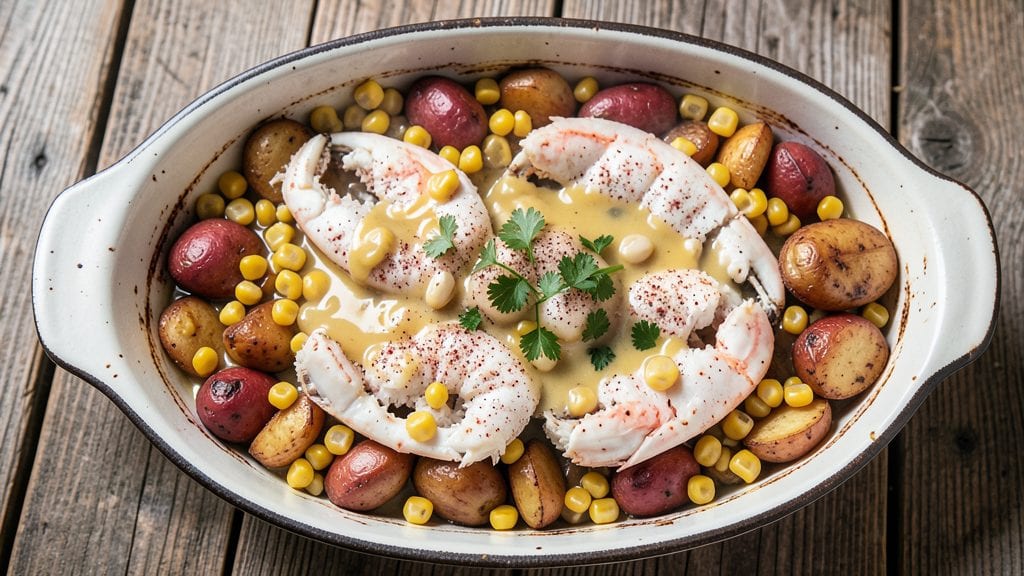
This baked crab boil recipe transforms a classic Southern tradition into a showstopping weeknight dinner that smells like a coastal seafood shack. The secret lies in layering crab legs with corn, potatoes, and a spiced broth, then baking until everything steams into buttery, flavorful perfection.
I perfected this version after years of experimenting with restaurant-quality techniques at home—no deep fryer or complicated prep required.
The magic happens in the 450°F oven, where the crab cooks through steam while absorbing the smoky, garlicky broth. Old-South spices like cayenne and paprika give it that signature kick, while melted butter creates a glossy finish that makes every bite irresistible.
This isn’t just a recipe; it’s a celebration of coastal flavors that turns a simple baking dish into a centerpiece-worthy meal.
By the time you pull it from the oven, you’ll have tender crab meat, flaky potatoes, and sweet corn all infused with that unmistakable seafood boil aroma. The broth reduces into a rich, savory glaze that clings to every ingredient, delivering restaurant-quality results without the fuss.
Serve with crusty bread to soak up every last drop of that buttery, spiced goodness.
This dish scales beautifully—whether you’re feeding a family of four or hosting a seafood gathering. The prep takes just 20 minutes, and the baking time ensures everything cooks through evenly. No more worrying about overcooked crab or soggy sides; this method guarantees a foolproof, melt-in-your-mouth experience every time.
Ingredients for baked crab boil
Layered seafood magic with Old-South spices and buttery steam—this crab boil transforms humble ingredients into a coastal centerpiece.
| Ingredient | Amount | Notes |
|---|---|---|
| Fresh Jumbo Lump Crab Legs 🦀 | 8 whole | Clarified butter brushed on top |
| Yellow Corn Kernels 🌽 | 2 cups | Fresh or frozen, no husk |
| Baby Red Potatoes 🥔 | 2 lbs | Halved, skin-on for texture |
| Unsalted Butter 🧈 | ¾ cup | Cold, cubed for melting |
| Garlic Cloves 🧄 | 6 cloves | Smashed, skin-on for infusion |
| Old Bay Seasoning 🌶️ | 2 tbsp | The signature seafood spice |
| Smoked Paprika 🌶️ | 1 tbsp | For that Old-South smokiness |
| Cayenne Pepper 🔥 | ½ tsp | Adjust for heat preference |
| Kosher Salt 🧂 | 1 ½ tsp | Diamond Crystal preferred |
| Black Peppercorns 🌶️ | ½ tsp | Freshly cracked for depth |
| Lemon Wedges 🍋 | 2 whole | For serving, not cooking |
| Fresh Parsley 🌿 | ¼ cup | Chopped, for garnish |
| Heavy Cream 🥛 | ¼ cup | For finishing the broth |
| Chicken Stock 💧 | 1 cup | Low-sodium, homemade preferred |
The crab legs are the star, so go for fresh jumbo lumps—pre-cooked or frozen works, but nothing beats the snap of a live-harvested leg. Costco or Whole Foods usually carry the best quality, and you can often find them pre-cracked for convenience. If you're using frozen, thaw them overnight in the fridge so they don't release water into your dish. The potatoes? Baby reds stay firm and hold their shape better than Yukon Golds in this high-heat bake. Halve them before adding to the dish so they cook through evenly. For the corn, fresh is ideal but frozen works too—just drain and dry it well before layering.
No Old Bay on hand? Mix 1 tsp each of celery salt, paprika, and black pepper—it's not identical, but it'll get you close. Short on smoked paprika? Regular paprika plus a pinch of liquid smoke mimics that signature flavor. The cayenne is where you can play—start with half a teaspoon if you're sensitive to heat. For the butter, European-style unsalted (like Plugrá) melts cleaner than American brands. The heavy cream at the end is non-negotiable—it creates that luscious, restaurant-worthy finish. If you're feeling fancy, swap the chicken stock for seafood stock—the difference is subtle but noticeable.
Prep ahead: Halve the potatoes and smash the garlic the night before. The crab legs can sit at room temp for up to 30 minutes before baking, but don't let them linger. This dish reheats beautifully—just pop it back in the oven at 350°F for 15 minutes—though it's honestly best fresh out of the oven. Store leftovers in an airtight container for 2 days max; the crab gets rubbery after that. For a crowd, double the recipe—it scales perfectly in a 9x13-inch baking dish. The aroma alone will have everyone gathering at the table.
Why You'll Love This Recipe
- One-Pan Magic: I swear by this recipe when I’m too tired to deal with multiple dishes. Toss everything—crab, potatoes, corn—onto a sheet pan, drizzle with melted butter, and let the oven do the work. Fifteen minutes later, zero cleanup, just pure satisfaction.
- Butter-Garlic Bliss: That first bite? The garlic-infused butter melts into the crab legs while the potatoes get tender and crispy in spots. It’s like a seafood feast without the fuss—rich, savory, and so easy to customize with Old Bay or lemon zest if you’re feeling fancy.
- Tailgate or Tuesday: Honestly, this feeds a crowd but still works for two. Double the crab for a summer cookout, halve it for a lazy dinner. The potatoes and corn reheat beautifully, so it’s my go-to when I need something hearty but not heavy.
- Leftovers? Please.: Between us, I always make extra because the crab stays delicious cold in salads or wraps the next day. And the potatoes? Even better reheated with a sprinkle of parsley. It’s the kind of meal that turns into lunch without a second thought.
Step-by-step instructions for baked crab boil with Old-south flavors
Here's how to transform simple ingredients into a decadent crab boil with rich, smoky flavors and melt-in-your-mouth textures.
Prep the Vegetables and Potatoes
Preheat your oven to 400°F while you prepare the components. Halve the 2 pounds of baby red potatoes lengthwise, leaving the skin intact for added texture. Toss them in a large bowl with 2 tablespoons of Old Bay seasoning, 1 tablespoon of smoked paprika, 1.5 teaspoons of kosher salt, and 0.5 teaspoon of cayenne pepper. You want the potatoes to be well-coated but not soggy—this ensures they crisp up beautifully in the oven.
In a separate bowl, combine the 2 cups of yellow corn kernels with the 6 smashed garlic cloves (leave the skins on for deeper flavor). Drizzle lightly with 2 tablespoons of melted unsalted butter (reserve the remaining 0.5 cup for later) and toss gently. The corn should glisten slightly but not be swimming in butter—this prevents steaming and promotes caramelization.
Assemble the Crab and Seasoning
Arrange the 8 whole fresh jumbo lump crab legs in a single layer on a large sheet pan or baking dish. Brush each leg generously with the remaining 0.5 cup of melted unsalted butter, making sure to get into the crevices. This step is crucial—it creates that signature crispy exterior while keeping the meat tender inside. Sprinkle the crab with another 1 tablespoon of Old Bay seasoning, 0.5 teaspoon of black peppercorns, and a pinch of cayenne pepper for a subtle kick.
Real talk: Don't skip the butter brushing. I've tried this recipe without it, and while the crab is still delicious, that golden crust and buttery richness make all the difference. The crab will release its natural juices as it bakes, so we'll capture those flavors in the next step.
Layer and Bake the Crab and Potatoes
Place the seasoned potatoes around the crab legs in the baking dish, creating a single layer. Pour the 1 cup of chicken stock evenly over the potatoes and crab. This liquid will infuse with the spices and create a flavorful broth as everything bakes. Scatter the corn and garlic mixture over the top, nestling it between the potatoes and crab.
Cover the baking dish tightly with aluminum foil and bake for 30 minutes. The foil traps steam and ensures the potatoes cook through without drying out. After 30 minutes, remove the foil and bake for another 15-20 minutes until the potatoes are tender when pierced with a fork and the crab legs are heated through. You'll know it's ready when the edges of the potatoes are golden and the corn has a slight char.
Finish with Cream and Garnish
Once everything is cooked, carefully transfer the crab legs, potatoes, and corn to a serving platter. In the same baking dish, pour in the 0.25 cup of heavy cream and scrape up any browned bits from the bottom with a wooden spoon. This creates a quick, velvety sauce that captures all the flavors from the bake. Simmer for 2-3 minutes until slightly thickened, then drizzle it generously over the crab and potatoes.
Garnish with the 0.25 cup of chopped fresh parsley and serve immediately with the 2 lemon wedges on the side. The contrast of the bright citrus with the rich, spiced crab is what makes this dish truly special. Each bite should deliver tender crab, crispy potatoes, and sweet corn all bathed in that smoky, buttery sauce.
Pro Tips For Making Baked Crab Boil
- Preheat Like It’s 1999: Your oven needs to hit 425°F (220°C) and sit for 15 minutes before adding the crab—no exceptions. I learned this the hard way when my crab legs came out rubbery instead of tender. That extra time lets the pan get screaming hot, so the butter sizzles and the garlic doesn’t steam.
- Poke Those Potatoes: Use a fork to stab each baby red potato 3-4 times before baking. Without this, they’ll explode like overripe tomatoes in your oven, turning your elegant boil into a messy cleanup. Trust me, it’s not worth the fight.
- Butter the Corn First: Toss the corn kernels in half the melted butter before adding them to the pan. This keeps them from drying out while the crab and potatoes bake. I was skeptical until I tried it—now it’s non-negotiable.
- Don’t Overcrowd the Pan: Leave at least 1 inch of space between crab legs and potatoes. If you cram them in, the butter pools instead of basting everything, and your crab ends up steamed instead of golden. Think of it like parking—parallel parking works better when you give things room.
Storing and reheating this baked crab boil
Refrigerator Storage
Store leftovers in an airtight container for up to 2 days—the crab stays tender, but the potatoes may dry out slightly after day one. I like using glass Pyrex containers because they maintain the dish's aroma better than plastic.
Let the crab boil cool completely before sealing to prevent condensation, which can make the crab rubbery. The broth-based sauce will thicken further in the fridge, so you might want to reheat it with a splash of water or stock to restore its velvety texture. 🥫
Freezer Prep Tips
This dish freezes surprisingly well for up to 1 month if you handle it right. First, cool it completely, then portion into freezer-safe containers or ziplock bags, leaving 1-inch headspace for expansion.
The crab legs will be slightly softer after thawing, but the potatoes and corn retain their texture beautifully. For best results, thaw overnight in the fridge before reheating. I avoid freezing the sauce separately—it absorbs flavors better when kept with the main components. ❄️
Oven Reheating Method
For the best texture, reheat in a 400°F oven for 15-20 minutes, covered loosely with foil. This method mimics the original baking process, keeping the crab moist and the potatoes crispy. If the sauce looks too thick, add 1 tablespoon of water or chicken stock before reheating.
I like to sprinkle a pinch of Old Bay seasoning on top before reheating to revive those smoky flavors. The dish should reach an internal temperature of 165°F for the crab and potatoes. 🔥
Microwave Shortcut
When time is tight, use the microwave on 50% power for 2-3 minutes in 1-minute intervals, stirring between each. Add a splash of water or stock to prevent drying.
The crab legs will be safe to eat at 165°F internal temperature, but they won't be as crispy as oven-reheated. This method works best for the potatoes and corn—just avoid overcooking the crab, which can turn rubbery quickly. 💡
Broth Revival Trick
The sauce often thickens when reheated, but you can easily revive it by adding 1-2 tablespoons of warm chicken stock and simmering for 2-3 minutes on the stovetop. For extra richness, stir in 1 tablespoon of melted butter or a splash of heavy cream.
This step transforms a potentially dry dish into something luscious and restaurant-worthy again. The key is to keep the sauce moving while reheating to prevent scorching. 🥛
Serving Leftovers
Leftovers make an amazing next-day lunch or picnic. Pack individual portions in small glass containers for easy transport—they stay hot longer and keep flavors intact. For a fun twist, serve the reheated crab boil in buns or lettuce wraps with a side of coleslaw.
The buttery, spiced flavors hold up beautifully, making this a versatile dish for meal prep. Just remember: crab is best enjoyed fresh, so prioritize eating it within 24 hours for peak texture. 🍽️
Nutrition facts
Frequently asked questions
Can I use frozen crab legs instead of fresh?
Yes, but thaw them completely first! Place frozen crab legs in the fridge overnight or use the cold water method in a sealed bag for 1-2 hours. Never microwave or use warm water—this can make the meat rubbery. Pat them dry before baking to ensure that crispy butter crust.
What if I don't have Old Bay seasoning?
Make your own blend: mix 1 tsp celery salt, 1 tsp paprika, ½ tsp black pepper, ¼ tsp garlic powder, and ¼ tsp thyme. For extra depth, add a pinch of mustard powder. The flavor won't be identical, but it'll still give that signature seafood kick!
How do I adjust this for a crowd?
Double the recipe and use a 9x13-inch baking dish instead of a sheet pan. For 12-16 servings, scale up to 16 crab legs, 4 lbs potatoes, and 4 cups corn. Increase the stock to 2 cups and butter to 1 cup. Bake at 400°F for 40-45 minutes, covered for 25 minutes then uncovered.
Why did my crab turn rubbery?
Overcooking is the most common cause! Crab cooks in just 15-20 minutes at 400°F. Use a meat thermometer—it should reach 145°F internally. Also, avoid reheating leftovers in the microwave (they dry out). Stick to oven reheating at 350°F for 15 minutes with foil.
Can I make this dish ahead of time?
Assemble everything (except the heavy cream) up to 24 hours ahead and refrigerate uncovered. Bake straight from the fridge—just add 5-10 extra minutes to the baking time. For make-ahead parties, prep the sauce separately and reheat it with the main dish. The flavors deepen overnight!