Soups & Stews
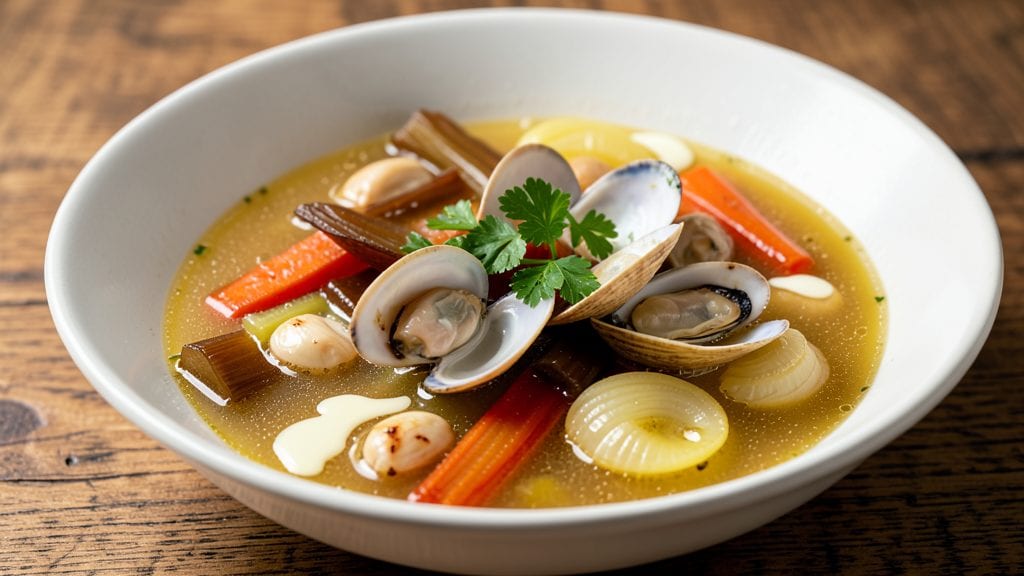
Creating a rich clam broth recipe is the foundation for transforming simple ingredients into something truly extraordinary. This umami-packed liquid captures the briny essence of clams while building layers of flavor through careful technique—something I perfected after years of experimenting with seafood stocks.
The result is a versatile broth that elevates everything from chowders to noodle bowls, bringing restaurant-quality depth to home cooking.
What makes this recipe special is the balance of simplicity and precision. You'll start with fresh clams, aromatic vegetables, and a touch of white wine to deglaze the pot, creating a base that's both clean and deeply flavorful.
The key lies in simmering the mixture just until the clams release their essence—no need for long cooking times or complicated steps. This method ensures a broth that's clear, aromatic, and packed with the natural sweetness of the sea.
By the end, you'll have a clam broth so rich and nuanced it becomes the star of any dish. Strain it for a silky texture or leave it slightly cloudy for added body—either way, the flavor is unmatched.
Use it as the base for clam chowder, ramen, or even as a dipping sauce for crusty bread. The possibilities are endless, and the results will impress even the most discerning seafood lovers.
This recipe is perfect for pescatarians and seafood enthusiasts alike, offering a versatile foundation that can be adapted to countless meals. Store leftovers in the refrigerator for up to three days or freeze for future use—because great broth deserves to be savored whenever inspiration strikes.
Let's get started on creating your own briny masterpiece.
Ingredients for clam broth
Fresh clams and aromatic vegetables transform into briny, umami-rich broth with minimal effort.
| Ingredient | Amount | Notes |
|---|---|---|
| Fresh Clams 🦪 | 2 lbs | Steamed open, shells reserved |
| Yellow Onion 🧅 | 1 whole | Chopped into 1/2-inch pieces |
| Garlic Cloves 🧄 | 6 cloves | Smashed, not minced |
| Celery Stalks 🥬 | 3 whole | Trimmed, cut into 1-inch pieces |
| Carrot 🥕 | 1 whole | Peeled, cut into chunks |
| White Wine 🍷 | 1 cup | Dry, like Sauvignon Blanc |
| Fresh Thyme 🌿 | 2 sprigs | Stems removed, leaves only |
| Fresh Parsley 🌿 | ¼ cup | Chopped, for finishing |
| Bay Leaves 🍃 | 2 whole | Dried, standard size |
| Extra-Virgin Olive Oil 🫒 | ¼ cup | High-quality, fruity |
| Sea Salt 🧂 | 1 tsp | Kosher or fine grain |
| Black Peppercorns 🌶️ | ½ tsp | Freshly cracked |
| Lemon Juice 🍋 | 1 tbsp | Freshly squeezed |
| Water 💧 | 4 cups | Filtered or spring water |
The clams are the heart of this broth, so prioritize freshness. Whole, live clams from a trusted seafood market or reputable grocery store like Whole Foods or Trader Joe's are ideal—they should be tightly closed or close when tapped. If you're using pre-shucked clams, opt for the freshest available, preferably from the seafood counter rather than the frozen section. The shells can be reserved for their natural minerals, but don't rinse them—they carry flavor. For the vegetables, organic carrots and celery add subtle sweetness, while the onion and garlic provide depth. If you can't find fresh thyme, dried thyme at one-third the amount works, but fresh is preferred for its vibrant aroma. The white wine should be dry and crisp—Sauvignon Blanc or Pinot Grigio are classic choices, but avoid anything overly oaked or sweet.
No fresh clams? High-quality canned clams (like those from Brooklyn Clam Chowder brand) can be substituted, but drain them thoroughly and rinse with water to remove excess sodium. Swapping the white wine for dry vermouth or additional water with a splash of apple cider vinegar keeps the acidity balanced. If you're missing thyme, fresh oregano or marjoram can stand in, though the flavor profile shifts slightly. For a vegetarian twist, replace the clams with 2 cups chopped mushrooms (shiitake or cremini) plus 1 tbsp seaweed flakes to mimic the umami. The olive oil should be extra-virgin and fruity—cheap oil will taste harsh in the finished broth. And if you're short on time, clam juice from a can (like Bumble Bee) can be used as a base, but it lacks the depth of homemade.
This broth peaks in flavor after 2-3 days in the refrigerator, so make it ahead if possible. Store it in an airtight container, submerged under a thin layer of olive oil to preserve freshness. For longer storage, freeze in ice cube trays—perfect for adding to dishes later. The broth keeps well for up to 3 months in the freezer, though the texture may separate slightly upon thawing. To reuse shells, rinse them thoroughly after steaming and store in a sealed container in the freezer for future stocks. If you end up with extra clam liquor (the juice from the shells), freeze it separately—it's liquid gold for seafood dishes.
Why You'll Love This Recipe
- No Chopping Chaos: I swear by this recipe because the veggies—onion, celery, carrot—can all go in whole or roughly chopped. The broth actually builds flavor while simmering, so even if I’m distracted (or lazy), the garlic and clams do the heavy lifting.
- Umami Bomb: That first sip? Pure satisfaction. The clams release their briny sweetness into the broth while the garlic and onion caramelize just enough to make your kitchen smell like a coastal seafood shack. Honestly, I’ve made this with store-bought clams and it still hits.
- Leftovers That Shine: This broth doesn’t just disappear after one meal. Strain it, store it, and use it for anything—pasta, risotto, even a quick soup the next day. My freezer is full of these jars, and they’re my secret weapon for lazy weeknights.
- Budget-Friendly Luxury: Fresh clams might sound fancy, but they’re often cheaper than shrimp or scallops, and this recipe uses just enough to make it feel special. Between us, I’ve stretched a single batch into three meals without breaking the bank—or my taste buds.
Step-by-step instructions for clam broth
Transform fresh clams and aromatic vegetables into a rich, umami-packed broth that forms the foundation for countless coastal dishes.
Open and Prepare the Clams
Rinse the 2 lbs fresh clams under cold water to remove any grit or debris. Place them in a large pot with the 4 cups water and bring to a boil over medium-high heat. Cover and steam for 5-7 minutes until most clams open—discard any that remain closed as they're not fresh. Remove the clams from the shells, reserving both the meat and shells for the broth.
Return the opened clams to their shells and set aside. The shells will infuse the broth with their natural briny essence, while the clam meat will contribute rich umami flavor. This initial steaming process ensures you capture all the clam's flavor without overcooking the meat.
Build the Aromatic Base
In the same pot, heat the 0.25 cup extra-virgin olive oil over medium heat until shimmering. Add the 1 whole yellow onion, 3 whole celery stalks, and 1 whole carrot, all chopped as specified. Sauté for 8-10 minutes until the vegetables soften and the onion becomes translucent.
Add the 6 cloves smashed garlic cloves, 2 sprigs fresh thyme, and 2 whole bay leaves to the pot. Cook for another 2 minutes until the garlic releases its aromatic oils. This aromatic base forms the flavor foundation of your clam broth, so don't rush this step.
Deglaze and Simmer
Pour in the 1 cup white wine and scrape up any browned bits from the bottom of the pot. This deglazing step captures all the concentrated flavors that would otherwise burn. Allow the wine to reduce by half—this should take about 3-4 minutes—until it's nearly evaporated.
Add the reserved clam shells and the 1 tsp sea salt and 0.5 tsp black peppercorns to the pot. Pour in enough water to cover everything by about 1 inch—you should have approximately 4 cups total liquid at this point. Bring the mixture to a gentle simmer over medium-low heat.
Cook the Broth
Simmer the broth uncovered for 20-25 minutes, stirring occasionally. You'll notice the liquid will gradually deepen in color and develop a rich, briny aroma. Skim off any foam that rises to the surface with a ladle to keep the broth clear.
After 20 minutes, add the reserved clam meat to the broth. Continue simmering for another 5 minutes to infuse the clams with the aromatic flavors. The broth should now have a deep golden color and a complex, layered flavor profile that balances brininess with herbal notes.
Finish and Strain
Remove the pot from heat and stir in the 1 tbsp lemon juice. This brightens the broth and balances its richness. Let the broth steep off the heat for 10 minutes to allow all the flavors to meld together.
Strain the broth through a fine-mesh sieve into a clean pot, pressing gently on the solids to extract maximum flavor. Discard the solids. The finished broth should yield about 4 cups of rich, flavorful liquid. Taste and adjust seasoning if needed—you may need to add a pinch more salt to enhance the briny depth.
Pro Tips For Making Clam Broth
- Scrub Those Clams: Fresh clams need a good scrub—don’t just rinse them. Use a stiff brush under cold water to remove grit and barnacles, especially if they’re from a rocky shore. I learned this the hard way when a guest found a tiny pebble in their broth.
- Sauté the Aromatics Hard: Cook the onion, garlic, celery, and carrot until they’re deeply golden, not just soft. A crowded pot steams instead of caramelizes—give them space and let them sizzle for 8–10 minutes. This builds flavor that cuts through the briny clam taste.
- Shock Clams Before Steaming: Drop clams into boiling water for 30 seconds, then transfer to ice water. This stops cooking and makes them easier to shuck—no more struggling with stubborn shells. (Yes, it’s extra work, but your broth won’t taste like overcooked rubber.)
- Strain, Then Strain Again: Use a fine-mesh sieve first to catch big debris, then a cheesecloth-lined strainer for a silky broth. I skip the second step half the time, and the result is always cloudy—worth the extra 30 seconds for clarity.
Troubleshooting perfect results
Clams Won't Open
If your clams refuse to open during the 5-7 minute steaming phase, it’s a sign they’re not fresh. I’ve learned this the hard way—once, I used clams from a questionable batch at a market, and they stayed stubbornly closed.
Always test freshness by tapping them on the counter: if they don’t close immediately, they’re good. Discard any unopened clams and start fresh with a new batch from a trusted seafood purveyor like Whole Foods or your local fishmonger. 🦪
Broth Too Cloudy
A cloudy broth often means you didn’t skim foam enough during simmering or used too much vegetable matter. For a crystal-clear result, strain the broth through a cheesecloth-lined fine-mesh sieve after simmering, pressing gently on the solids.
If it’s still cloudy, simmer the strained broth uncovered for an extra 5 minutes—this helps clarify it. I once had a batch turn cloudy because I rushed the straining; patience is key here. ✨
Weak Flavor Profile
If your broth tastes bland, it’s likely because the clams weren’t fresh or the simmering time was too short. To fix this, add 1 tbsp fish sauce or ½ tsp seaweed flakes to deepen the umami.
For extra richness, simmer the strained broth with 1 more clam shell (cleaned) for 10 minutes before straining again. I also like to finish with a splash of clam juice (like Bumble Bee) for an instant briny boost. 💡
Shells Too Salty
If the broth tastes overly salty, it’s probably from the clam shells or added salt. To balance it, stir in 1 tbsp lemon juice or a pinch of sugar to cut the saltiness. If the shells were the issue, rinse them thoroughly before using in future batches.
I once made broth with salty shells and ended up overcorrecting with lemon—find that sweet spot by tasting as you go. 🍋
Broth Too Thin
A watery broth usually means you added too much liquid during simmering. To thicken it, simmer the strained broth uncovered for 10-15 minutes to reduce. For extra body, whisk in 1 tbsp cornstarch mixed with 2 tbsp cold water and cook for 2 minutes until thickened.
If you’re using it for chowder or soup, a slightly thinner broth is fine—just add a ½ cup cooked potatoes or rice to absorb excess liquid. 🥣
Fishy Aftertaste
A strong fishy taste means the clams were old or overcooked. To mask it, add ½ tsp fresh parsley or 1 tsp white miso paste to the broth. If the flavor is still off, start over with fresher clams—this is non-negotiable.
I once had a batch turn fishy because I simmered it too long, so always keep an eye on the clock and taste as you go. 🌿
Nutrition facts
Frequently asked questions
Can I use canned clams instead of fresh?
Yes, but with adjustments! Drain and rinse 2 (14.5 oz) cans of clams thoroughly to remove excess sodium. Use 1 cup clam juice from the can as part of your liquid base instead of water. For extra depth, add 1 tbsp fish sauce or ½ tsp seaweed flakes to mimic fresh clam umami. The texture will be slightly different but still delicious for soups or stews.
How long does this broth keep in the fridge?
Store in an airtight container for up to 3 days in the refrigerator. For best flavor, use within 2 days—it peaks after 24 hours when the flavors meld. To preserve freshness, cover the surface with a thin layer of olive oil before sealing. Freeze for up to 3 months in ice cube trays for portion control.
What are the best ways to use leftover broth?
This versatile broth shines in clam chowder, seafood risotto, or as a base for clam linguine. Reduce it by half for a concentrated sauce, or use it to poach delicate seafood like scallops. For a quick meal, toss with udon noodles, top with soft-boiled eggs, and garnish with green onions. The possibilities are endless—don't let leftovers go to waste!
Can I make this broth vegetarian?
Replace the clams with 2 cups chopped mushrooms (shiitake or cremini) plus 1 tbsp seaweed flakes or 1 packet (2 tsp) bonito flakes for umami. Use vegetable broth instead of water, and add 1 tbsp soy sauce or miso paste for depth. The texture will be earthier but still rich and satisfying.
Why does my broth taste fishy?
A strong fishy flavor usually means the clams weren't fresh or were overcooked. To fix it, simmer the broth with ½ tsp fresh parsley or 1 tsp white miso paste to balance the taste. For future batches, always test clam freshness by tapping them—they should close immediately. If the flavor persists, start over with fresher clams or reduce the simmering time to 15 minutes total.