
Soups & Stews
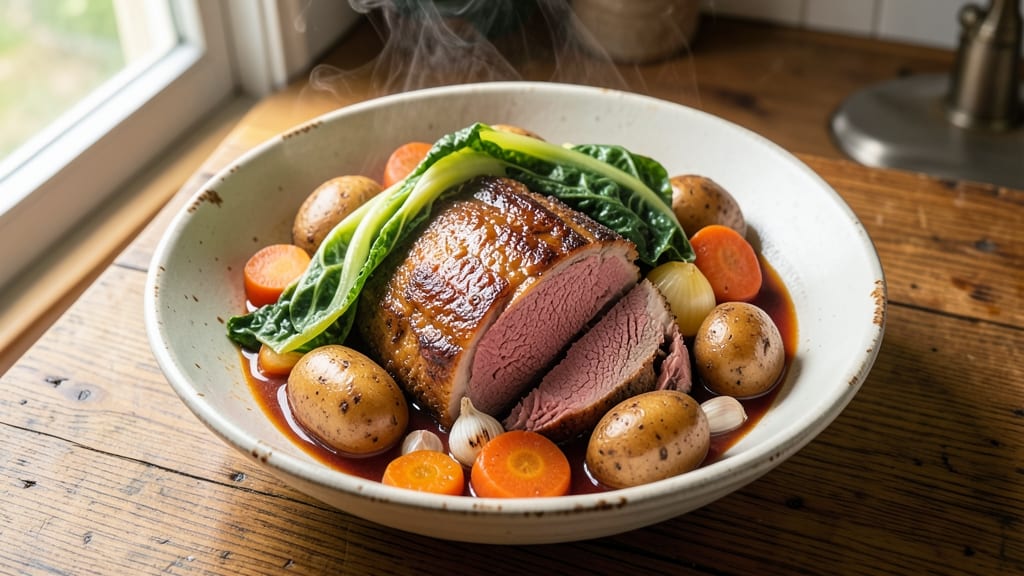
Martha Stewart’s corned beef and cabbage recipe delivers the kind of slow-braised richness that transforms a simple pot into a centerpiece for St. Patrick’s Day or any cozy Sunday dinner.
The secret lies in a proper brine, tender corned beef, and cabbage that softens just enough to absorb the savory broth—no tough edges here. I’ve adapted her classic method to include potatoes and carrots for a complete, one-pot meal that feels like a restaurant-quality stew.
The process begins with a 24-hour brine to ensure the beef stays juicy and flavorful, then simmers low and slow until the meat is fork-tender and the vegetables melt into the broth.
This isn’t just a side dish—it’s a hearty main that pairs perfectly with warm soda bread, soaking up every last drop of that aromatic, peppery broth. The result? A dish so deeply satisfying it turns even the simplest meal into an occasion.
What sets this version apart is the balance of textures: crisp edges on the cabbage, tender beef that nearly falls apart, and potatoes that absorb the flavors without turning mushy. The aroma alone—smoky, spiced, and slightly sweet—will have everyone gathering at the table before the timer even goes off.
This is comfort food at its finest, with just the right amount of effort to make it feel special.
Serve with buttered soda bread to complete the meal, and save leftovers for sandwiches the next day. The slow-cooked flavors only deepen over time, making this recipe as practical as it is impressive. Let’s get cooking—your table (and your taste buds) will thank you.
Ingredients for corned beef and cabbage martha stewart
Sixteen ingredients for a dish that feels like a restaurant-worthy celebration.
| Ingredient | Amount | Notes |
|---|---|---|
| Corned Beef Brisket 🥩 | 3 lb | Pre-brined, 3-4 inches thick |
| Green Cabbage 🥬 | 1 whole | Heads, cut into wedges |
| Russet Potatoes 🥔 | 2 lb | Peeled, cut into chunks |
| Carrots 🥕 | 1 lb | Whole, scrubbed, cut into chunks |
| Yellow Onions 🧅 | 2 whole | Peeled, quartered |
| Garlic Cloves 🧄 | 6 cloves | Peeled, smashed |
| Bay Leaves 🌿 | 2 whole | Dried, standard size |
| Black Peppercorns 🌶️ | 1 tbsp | Crushed, freshly ground preferred |
| Salt 🧂 | 2 tbsp | Kosher or sea salt |
| Water 💧 | 12 cups | For 24-hour brine |
| Apple Cider Vinegar 🍎 | ½ cup | For brine acidity |
| Brown Sugar 🍚 | ¼ cup | Light, for brine balance |
| Mustard Seeds 🌶️ | 1 tbsp | Yellow, for brine depth |
| Olive Oil 🫒 | 2 tbsp | Extra-virgin, for brine richness |
The corned beef brisket is the centerpiece—look for 3-4 inch thick cuts at Whole Foods or your local butcher shop for optimal tenderness. The brisket should have visible fat marbling for juiciness. For the vegetables, organic russet potatoes hold their shape better during slow cooking, but conventional works fine. Carrots should be firm with no soft spots, and cabbage should have crisp outer leaves. The yellow onions from Trader Joe's are my go-to—they're sweet and consistent. Garlic cloves should be plump and free from sprouts, and bay leaves should be whole, not crumbled.
No corned beef brisket? Substitute beef chuck roast (3 lbs) and prepare a separate brine using the same seasonings. For the cabbage, Napa cabbage works beautifully—it's more tender and slightly sweeter. Short on potatoes? Sweet potatoes hold up well and add a nice contrast. The apple cider vinegar can be swapped for white vinegar or lemon juice, though the flavor profile will differ slightly. Mustard seeds can be omitted if unavailable, but they add a subtle depth that's hard to replicate. For the olive oil, avocado oil works equally well if preferred.
The corned beef brisket should be brined for exactly 24 hours in the refrigerator. Once cooked, the stew keeps well in the fridge for 4-5 days and freezes beautifully for up to 3 months. For leftovers, reheat gently on the stove with a splash of water to restore moisture. The cabbage and potatoes will soften further upon reheating, so they're best enjoyed fresh. Store the brine ingredients separately if you plan to reuse them for another batch, as they'll keep indefinitely in a sealed container.
Why You'll Love This Recipe
- One-Pot Magic: I swear by this recipe when I’m too tired to deal with multiple pans. Toss everything—corned beef, cabbage, potatoes, carrots, onions—into one pot with the brisket’s pre-seasoned juices, and let it simmer. No chopping like a madman, no constant stirring. Just set it and forget it.
- Salty-Sweet Perfection: That corned beef brisket is already packed with garlic, peppercorns, and bay leaves, but the real magic happens when the potatoes soften into fluffy pillows and the cabbage turns tender with just a hint of bite. Honestly, the balance of salty, sweet, and earthy flavors makes me want to eat it straight from the pot.
- Leftovers That Beg: Between us, this stew only gets better the next day. The flavors meld into something deeper, and the potatoes soak up all that rich beef broth. I’ll make a double batch on Sundays just so I can reheat portions all week—no sad lunches here.
- Budget-Friendly Crowd-Pleaser: You’re getting a whole pound of brisket, a head of cabbage, and enough potatoes to feed four for under $15. It’s the kind of dish where no one complains, even if they pretend to. Plus, the leftovers stretch into sandwiches or hash the next day—zero waste, all win.
Step-by-step instructions for slow-braised corned beef and cabbage
This method delivers tender, flavorful corned beef with perfectly braised vegetables—every bite rich and satisfying.
Prepare the Corned Beef Brisket
Rinse the 3 lb corned beef brisket under cold water to remove any surface brine, then pat completely dry with paper towels. This step is crucial—excess moisture prevents proper browning and flavor development. Place the brisket in a large, heavy pot that can accommodate all your vegetables with room to spare.
In the same pot, heat the 2 tbsp olive oil over medium heat until shimmering. Add the 2 whole yellow onions (peeled and quartered) and cook for 5 minutes until softened and lightly golden. Stir in the 6 cloves garlic (smashed) and cook for 30 seconds until fragrant. This aromatic base forms the flavor foundation for your stew.
Build the Braising Liquid
Add the 12 cups water, 0.5 cup apple cider vinegar, 0.25 cup brown sugar, 1 tbsp mustard seeds, 2 whole bay leaves, and 1 tbsp crushed black peppercorns to the pot. Bring the mixture to a full boil over high heat, then reduce to a simmer. The liquid should be clear with visible bubbles but not vigorously boiling.
Carefully place the corned beef brisket into the pot, fat-side up. The brisket should be fully submerged—if not, add enough water to cover it completely. This ensures even cooking and prevents drying. Skim off any foam that rises to the surface during the first 10 minutes of simmering.
Simmer the Corned Beef
Cover the pot and simmer the corned beef on low heat for 3 hours. I recommend checking it at the 2-hour mark—if the liquid reduces too much, add 1 cup of hot water to maintain proper braising. The brisket is done when it's fork-tender and the internal temperature reaches 205°F at its thickest point.
While the brisket simmers, prepare the vegetables. Cut the 1 whole green cabbage into wedges, peel and cut the 2 lb russet potatoes into 2-inch chunks, and scrub and cut the 1 lb carrots into 2-inch pieces. These will cook in the same pot during the final stage.
Braise the Vegetables
Remove the corned beef from the pot and set it aside on a plate. Strain the braising liquid through a fine-mesh sieve to remove the bay leaves and mustard seeds, then return the liquid to the pot. Add the prepared vegetables—cabbage wedges, potato chunks, and carrot pieces—to the pot with the strained liquid.
Return the pot to medium heat and bring the liquid to a gentle boil. Reduce heat to maintain a simmer, then cover and cook for 25-30 minutes until the potatoes are tender and the carrots are fork-tender. The cabbage should be soft but still hold its shape. Season with the remaining 1 tbsp salt if needed, tasting the liquid to ensure proper seasoning.
Finish and Serve
Carefully return the corned beef to the pot with the vegetables. Simmer uncovered for 10-15 minutes to allow the flavors to meld and the liquid to reduce slightly. The corned beef should be fork-tender with rich, deep flavor. If the stew is too thin, simmer uncovered for an additional 5 minutes to thicken it slightly.
Serve the corned beef and vegetables hot, ladling the rich braising liquid over the top. The perfect slice of corned beef should be tender with a slightly crisp exterior, while the vegetables should be perfectly cooked but still vibrant. Pair with warm soda bread to soak up every last bit of flavorful sauce.
Pro Tips For Making Corned Beef And Cabbage Martha Stewart
- Sear the Brisket First: Martha’s recipe skips this, but trust me—browning that corned beef in a hot Dutch oven for 3-4 minutes per side builds flavor you’ll actually taste. Use a tablespoon of oil and don’t overcrowd the pan, or you’ll steam instead of sear. (Yes, it takes 10 extra minutes, but it’s worth it.)
- Core the Potatoes: I used to slice potatoes whole and wonder why they stayed tough. Martha’s recipe calls for 1-inch chunks, but core them first—cut out a ½-inch circle from the center so they cook evenly. No one wants a stew where the spuds are still rock-hard after hours.
- Salt the Cabbage: The cabbage in this recipe is already briny from the corned beef liquid, but if yours tastes bland, sprinkle it with ½ teaspoon of kosher salt and let it sit for 10 minutes before adding. It’s a tiny fix for a dish that can easily end up tasting like sad, watery soup.
- Simmer, Don’t Boil: The moment the liquid reaches a gentle bubble, reduce to low heat—not simmer, not a rolling boil. If you let it boil, the potatoes will turn to mush and the carrots will fall apart. Keep it at a whisper of a simmer, and the stew will thicken naturally without falling apart. (Your future self will notice the difference.)
Flavor customization for this dish
Spicy Kick
For heat lovers, add 1 tbsp smoked paprika and ½ tsp cayenne pepper to the braising liquid during Step 2. I also like tossing in 2-3 slices of chipotle peppers in adobo sauce (minced) for smoky depth.
The cabbage will absorb the heat beautifully, while the corned beef stays tender. Serve with extra hot sauce on the side for those who want to dial it up further. 🌶️
Sweet & Tangy Twist
Balance the richness with ½ cup apple cider (not vinegar) and 2 tbsp honey added during the final 10 minutes of simmering. This sweetens the broth without overpowering the savory flavors.
The carrots and potatoes will caramelize slightly, adding natural sweetness. A squeeze of fresh lemon juice at the table brightens each bite. 🍎
Herb-Infused Variations
Swap the bay leaves for 2 sprigs fresh thyme and 1 sprig rosemary (added during Step 2). The herbs add an earthy aroma that pairs perfectly with the corned beef.
For a brighter finish, stir in 1 tbsp chopped fresh parsley right before serving. Dill works too—it adds a fresh, slightly tangy note that cuts through the richness. 🌿
Smoky BBQ Fusion
Boost the smoky flavor by adding ¼ cup BBQ sauce (like Sweet Baby Ray's) and 1 tbsp liquid smoke to the braising liquid. This gives the stew a deep, charred flavor without needing a smoker.
The cabbage will soften into a smoky, slightly sweet side. Serve with extra BBQ sauce on the side for dipping. 🔥
Creamy Finish
For a luxurious touch, stir in ½ cup heavy cream or sour cream during the final 5 minutes of simmering. This adds a velvety texture that contrasts with the tender corned beef.
A sprinkle of crumbled feta cheese on top adds a salty tang. The cream also balances the acidity from the vinegar beautifully. 🥛
Asian-Inspired Glaze
Add 1 tbsp soy sauce, 1 tsp grated ginger, and 1 tsp sesame oil to the braising liquid. The umami from the soy sauce and ginger elevates the dish, while the sesame oil adds a nutty aroma.
Garnish with toasted sesame seeds and sliced green onions for a fresh, unexpected twist. 🌱
Nutrition facts
Frequently asked questions
How long should I brine the corned beef before cooking?
A proper 24-hour brine is essential for tender, flavorful corned beef. This allows the spices to fully penetrate the meat. Don't skip it—even if you're using pre-brined corned beef, the Martha Stewart method recommends this step for maximum juiciness.
Can I use a slow cooker instead of stovetop?
For the corned beef, cook on low for 8-10 hours (instead of 3 hours on stovetop). Add the vegetables during the last 2 hours of cooking. The slow cooker method is perfect for hands-off preparation, especially for large gatherings. The flavors will develop just as beautifully.
What's the best way to tell when the corned beef is done?
Use a meat thermometer to check the thickest part of the brisket—it should reach 205°F. The meat will be fork-tender and pull away from the bone easily. If you don't have a thermometer, cut into a small section and check for tenderness. Never rely on cooking time alone, as oven/stove variations affect doneness.
Can I make this recipe without potatoes?
Yes, but the dish will be less balanced. If omitting potatoes, add 1 lb more carrots or 1 head of cauliflower (cut into florets) to maintain texture contrast. The potatoes help thicken the stew and provide a satisfying bite. For a lighter version, you could also add green beans instead.
How do I reheat leftovers without drying out the corned beef?
Reheat gently on the stovetop with ½ cup water or broth to restore moisture. Cover and simmer on low heat for 10-15 minutes, stirring occasionally. Never microwave—it turns the meat tough. For sandwiches, reheat just the meat and assemble fresh to keep it tender. The vegetables can be reheated separately if needed.