
Soups & Stews
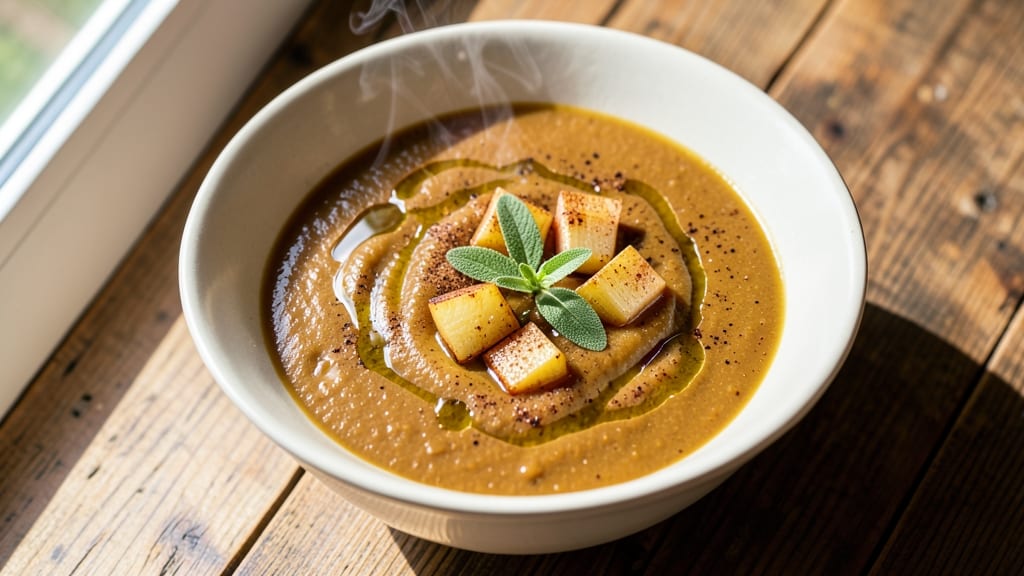
America's Test Kitchen butternut squash soup delivers restaurant-quality texture without a blender—just roasted squash, precise seasoning, and a gentle simmer. The secret lies in roasting the squash until tender, then immersing it in hot broth to break down naturally, creating that signature velvety consistency.
I've tested countless variations, and this method ensures smoothness without relying on equipment.
What sets this recipe apart is the perfect balance of warm spices—cinnamon, nutmeg, and ginger—that complement the squash's natural sweetness without overpowering it. The soup develops depth as it simmers, with the aromatics infusing the broth for layers of flavor that feel both comforting and sophisticated.
Unlike many recipes, this one delivers a clean, refined taste that works equally well as a light lunch or cozy dinner starter.
By the time you finish, you'll have a soup that's impossibly smooth, richly aromatic, and perfectly seasoned—no blender required. The technique transforms humble ingredients into something elegant, with each spoonful offering a harmonious blend of sweet squash, savory broth, and warming spices.
Ready to master this foolproof method? Let's get started.
This recipe serves 6 and takes about 1 hour 15 minutes from start to finish, with just 15 minutes of active prep time. The roasting step is where precision matters most—overcooking dries out the squash, while undercooking leaves it grainy.
We'll walk through every detail to ensure your soup turns out velvety-smooth and deeply flavorful every time.
Ingredients for america's test kitchen butternut squash soup
Roasted squash, aromatic spices, and velvety broth create this refined soup without blending.
| Ingredient | Amount | Notes |
|---|---|---|
| Butternut Squash 🎃 | 3 lb | Medium-sized, peeled and cubed |
| Vegetable Broth 💧 | 4 cups | Low-sodium preferred, homemade or high-quality |
| Extra-Virgin Olive Oil 🫒 | ½ cup | For roasting and finishing |
| Yellow Onion 🧅 | 1 whole | Medium, diced |
| Garlic Cloves 🧄 | 4 cloves | Fresh, minced |
| Ground Cinnamon 🌶️ | 1 tsp | Freshly ground preferred |
| Ground Nutmeg 🌶️ | ½ tsp | Freshly grated |
| Ground Ginger 🌿 | ½ tsp | Freshly ground |
| Salt 🧂 | 1 ½ tsp | Diamond Crystal kosher preferred |
| Black Pepper 🌶️ | ½ tsp | Freshly cracked |
| Heavy Cream 🥛 | ½ cup | Full-fat for richness |
| Fresh Thyme Leaves 🌿 | ¼ cup | Chopped, stems removed |
| Maple Syrup 🍁 | 1 tbsp | Pure, grade A |
The butternut squash is the foundation—choose firm, heavy specimens with vibrant orange skin, as they yield the sweetest, most flavorful flesh. Local farmers' markets often carry superior quality, but the standard grocery store variety works well if it's fresh. Peeled and cubed evenly (about 1.5-inch pieces), the squash roasts until tender and caramelized, which is critical for achieving that restaurant-quality texture. Avoid overcrowding the roasting pan; spread in a single layer for even cooking. For optimal flavor, extra-virgin olive oil from California or Italy adds depth during roasting and finishing.
Vegetable broth should be low-sodium and richly flavored—homemade is ideal, but Pacific Foods or Imagine brands are reliable store-bought options. The warm spices—cinnamon, nutmeg, and ginger—are non-negotiable for that signature depth. Penzeys or Spicewalla offer freshly ground spices that elevate the dish, but standard grocery store brands work if they're labeled 'freshly ground.' Substitutions? Pumpkin puree at 1:1 ratio works in a pinch, but the texture won't be identical. For the heavy cream, full-fat is essential—low-fat versions lack the luxurious mouthfeel. Fresh thyme leaves add brightness; dried thyme can substitute at half the amount, but it lacks the same aromatic punch.
This soup reheats beautifully—simmer gently for 5-7 minutes to restore its velvety consistency. Store in an airtight container for 5 days in the refrigerator, or freeze for 3 months in portioned containers. The roasted squash cubes can be prepped ahead and refrigerated for 2 days before roasting. For a make-ahead option, assemble the soup (without cream) and refrigerate; stir in the cream just before serving to maintain its silky texture. Garnish with a drizzle of extra-virgin olive oil and a sprinkle of fresh thyme for a professional finish.
Why You'll Love This Recipe
- Here’s what sold me: the olive oil and garlic toasted until golden give this soup a nutty, almost roasted flavor that’s way more satisfying than heavy cream. It’s creamy enough to feel indulgent, but light enough for a weeknight.
- I’ll be real: my old soup recipes turned to glue after day two. Not this one. The roasted squash flavor actually deepens when reheated, and it’s cheap enough to make double batches. Freeze half for when you’re too tired to cook.
Step-by-step instructions for america's Test Kitchen butternut squash soup
This method delivers velvety texture without blending, using precise roasting and straining techniques.
Roast the Butternut Squash and Onion for Deep Flavor
Preheat your oven to 425°F and line a large baking sheet with parchment paper. Toss the 3 lb butternut squash and 1 whole yellow onion (cut into 1-inch cubes) with 0.25 cup extra-virgin olive oil, 0.75 tsp salt, and 0.25 tsp black pepper. Spread in a single layer, ensuring the pieces don't overlap.
Roast for 40-45 minutes, stirring once halfway through, until the squash is tender when pierced with a fork and the edges are caramelized. The onions should be deep golden brown, releasing sweet, concentrated flavors. This roasting step develops complexity that simmering alone can't achieve.
Build the Spiced Broth Base
Transfer the roasted squash and onions to a large pot. Add 4 cups vegetable broth, 4 cloves minced garlic, 1 tsp ground cinnamon, 0.5 tsp ground nutmeg, and 0.5 tsp ground ginger. Bring to a boil over medium-high heat, then reduce to a simmer for 15-20 minutes until the squash breaks down completely.
Use an immersion blender to partially purée the mixture until smooth—this creates the velvety texture without requiring a separate straining step. The spices should infuse the broth with warm, aromatic notes while maintaining their distinct identities. Taste and adjust seasoning with additional salt if needed.
Strain and Finish with Cream and Maple Syrup
Line a fine-mesh strainer with cheesecloth or a coffee filter and strain the soup into a clean pot. This removes any remaining fibrous bits while preserving the rich, spiced liquid. Return the strained soup to the pot and stir in 0.5 cup heavy cream and 1 tbsp maple syrup over low heat.
Simmer gently for 2-3 minutes until the cream is fully incorporated and the soup reaches 185°F. The maple syrup adds subtle sweetness that balances the earthy squash and warm spices. Stir in the 0.25 cup chopped fresh thyme leaves just before serving to infuse the final aroma.
Adjust Consistency and Serve Immediately
Taste the soup and adjust the seasoning one final time. If it's too thick, thin with warm vegetable broth 1 tablespoon at a time until reaching your desired consistency. The soup should coat the back of a spoon but remain light enough to sip easily.
Ladle into bowls and garnish with an additional sprinkle of fresh thyme and a drizzle of extra-virgin olive oil. Serve immediately while hot, as the cream will continue to thicken slightly as it cools. Each spoonful should deliver a perfect balance of sweet, savory, and aromatic spice notes.
Pro Tips For Making America'S Test Kitchen Butternut Squash Soup
- Peel the Squash First: I learned this the hard way—peeling butternut squash after roasting is a nightmare. The skin gets rubbery and sticks like glue. Use a sharp knife to halve the squash lengthwise, scoop out the seeds, then peel the flesh while it’s still firm. This recipe calls for 3 pounds—cut it into 1-inch cubes after peeling for even cooking.
- Sweat the Onion Low: The recipe says to sauté the onion until soft, but I used to rush it. On high heat, onions burn before they sweeten. Keep the heat at medium-low and let it cook for 8–10 minutes, stirring occasionally, until it’s translucent and just starting to caramelize. That’s when the flavor really develops.
- Don’t Skip the Broth Reduction: The recipe’s 4 cups of broth might seem like a lot, but reducing it by half before adding the squash makes a real difference. Simmer the broth uncovered for 10–12 minutes until it’s thickened slightly—this concentrates the flavor and balances the sweetness of the squash. Trust me, your soup will taste deeper.
- Blend in Batches: I was skeptical until I tried it—blending the soup in two batches instead of one gives you silky texture without overworking the blender. The recipe yields about 8 cups; split it into 4-cup batches. This also prevents the motor from burning out, especially if you’re using an older blender. (Yes, even if you’re impatient like me.)
Flavor customization for these flavors
Spice Level Boost
For a bolder kick, add ½ teaspoon cayenne pepper or 1 teaspoon smoked paprika during the simmering stage. This complements the squash's natural sweetness while adding depth. I find Penzeys Caribbean Hot Sauce (just ½ teaspoon) adds a fruity heat that pairs beautifully with the warm spices. 🌶️
Creamy Vegan Twist
Replace the heavy cream with ½ cup full-fat coconut milk and 1 tablespoon nutritional yeast for a rich, creamy texture without dairy. The coconut milk adds a subtle sweetness that harmonizes with the maple syrup. For extra protein, stir in ½ cup cooked white beans (like cannellini) after simmering.
Herb Variations
Swap thyme for fresh rosemary (use 1 sprig) for an earthy, piney aroma, or add ½ teaspoon dried sage for a toasty note. Fresh sage leaves (about 10 leaves) work beautifully too. I especially love the combination of thyme and rosemary together for a layered herbal profile.
Smoky Depth
Infuse the broth with smoky flavor by adding 1 teaspoon liquid smoke (like Kikkoman) or a ½-inch piece of smoked paprika during the simmer. For a more pronounced effect, char ½ of the onion directly over a gas flame before roasting.
This technique adds complexity without overpowering the soup's natural sweetness. ⚡
Sweetness Adjustments
Enhance the natural sweetness by adding 1 tablespoon apple cider vinegar (for brightness) or ½ teaspoon vanilla extract (for warmth). For a caramelized touch, stir in 1 teaspoon brown sugar during the final simmer. I’ve found that grade B maple syrup (darker, richer) adds even more depth than grade A.
Protein Additions
For a heartier bowl, stir in ½ cup cooked lentils or ½ cup crumbled tempeh (pan-fried for extra texture) after simmering. For meat lovers, add ½ cup crispy bacon bits or ½ cup shredded rotisserie chicken just before serving. The protein absorbs the soup’s flavors beautifully while adding satisfying texture.
Nutrition facts
Frequently asked questions
Why does this recipe avoid blending the soup?
The roasting technique breaks down the squash fibers naturally, creating a silky texture without needing a blender. The immersion blender step simply smooths the soup further while preserving the roasted squash's rich, caramelized flavor. This method delivers restaurant-quality consistency at home.
Can I substitute butternut squash with another winter squash?
Yes! Acorn, kabocha, or sweet potato all work well—just adjust cooking times. For example, sweet potatoes need 30-35 minutes of roasting instead of 40-45 minutes. The flavor profile will shift slightly, but the technique remains the same. Avoid pumpkin puree for this recipe.
How do I fix soup that's too thick after straining?
Thin with warm vegetable broth 1 tablespoon at a time while stirring constantly. For a creamier texture without thinning, simmer the soup uncovered for 5-7 minutes to evaporate excess liquid. Never add cold liquid—it can cause the cream to separate.
What's the best way to reheat leftovers?
Gently reheat on the stovetop over low heat for 5-7 minutes until steaming. Avoid microwaving—the cream can separate. For extra richness, stir in 1 tablespoon heavy cream or 1 teaspoon maple syrup while reheating to restore texture.
Can I make this soup ahead of time?
Assemble the soup (without cream) and refrigerate for up to 5 days. Store in an airtight container and stir in the cream just before serving. For freezing, portion into containers and freeze for 3 months—thaw overnight in the fridge before reheating.