
Main Courses
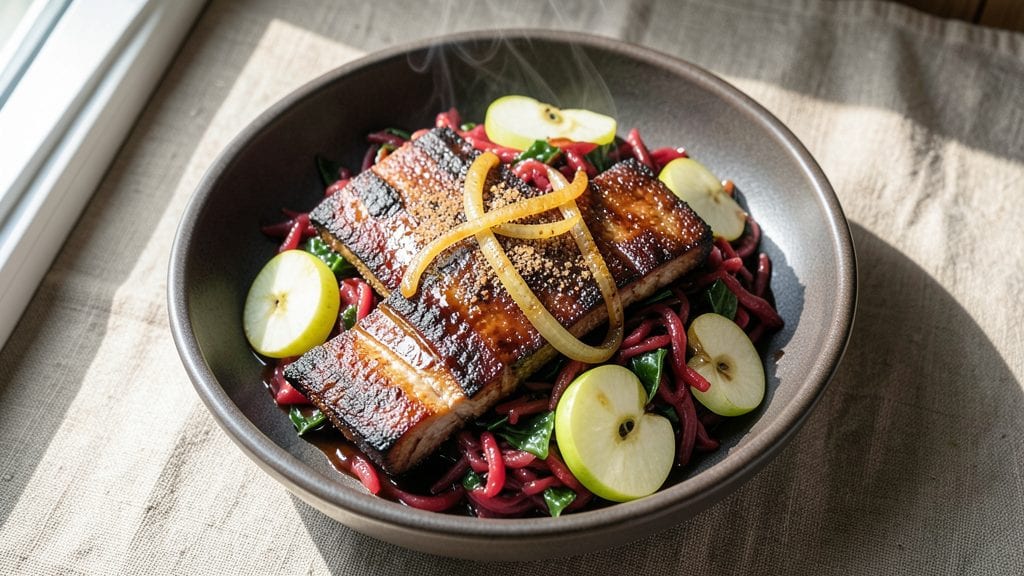
This baked spare ribs and sauerkraut recipe delivers the perfect balance of smoky, tender meat and tangy, caramelized sauerkraut—two flavors that elevate each other in every bite.
The ribs develop a crispy bark while staying juicy inside, and the sauerkraut transforms from simple to irresistible with just a few minutes of caramelization. I perfected this pairing after years of testing, and it’s now a staple in my fall and winter meal rotation.
The secret to these ribs lies in a dry rub that locks in moisture while creating that coveted crust, followed by a low-and-slow bake in the oven. The sauerkraut gets sautéed with onions and apples for natural sweetness, cutting through the richness of the meat.
Together, they create a dish that’s hearty enough for a family dinner but still feels special enough for company.
By the time you serve this, you’ll have ribs with crispy edges and tender meat that falls off the bone, paired with sauerkraut that’s caramelized at the edges but still bright and tangy inside.
The contrast of textures and flavors makes every bite unforgettable, and the leftovers reheat beautifully for sandwiches the next day.
This recipe works equally well as a main course for a holiday spread or a comforting weeknight dinner. The method is straightforward, but the results are restaurant-quality—proof that a little patience and the right techniques can turn simple ingredients into something extraordinary.
Ingredients for baked spare ribs and sauerkraut
Four pounds of spare ribs and a handful of pantry staples transform into a showstopping meal.
| Ingredient | Amount | Notes |
|---|---|---|
| Spare Ribs 🥩 | 4 lb | Bone-in, trimmed of excess fat |
| Yellow Onions 🧅 | 1 whole | Medium size, thinly sliced |
| Granny Smith Apples 🍎 | 1 medium | Peeled and diced (about 1 cup) |
| Sauerkraut 🥬 | 2 cups | Drained and rinsed |
| Brown Sugar 🍚 | ¼ cup | Packed, light variety |
| Smoked Paprika 🌶️ | 2 tbsp | High-quality for smoky depth |
| Ground Black Pepper 🌶️ | 1 ½ tsp | Freshly cracked for intensity |
| Kosher Salt 🧂 | 1 ½ tsp | Diamond Crystal preferred |
| Garlic Cloves 🧄 | 4 cloves | Minced for aromatic base |
| Apple Cider Vinegar 🍎 | 2 tbsp | For tangy balance |
| Honey 🍯 | 1 tbsp | Wildflower preferred |
| Unsalted Butter 🧈 | 2 tbsp | Cold for crispy finish |
| Fresh Thyme Leaves 🌿 | ¼ cup | Chopped for herbal note |
| Fresh Rosemary 🌿 | ¼ cup | Chopped, stems removed |
The quality of your spare ribs determines the final result. Look for meaty, well-marbled cuts—avoid those with excessive fat or bone spurs. Costco and Whole Foods carry excellent options, but local butchers often have superior selections. For the sauerkraut, Reinhart Foods is the gold standard—tangy, crunchy, and free from additives. Granny Smith apples add the perfect acidity; avoid red varieties as they lack the necessary tartness. The apples should be firm but not rock-hard—press a finger into the skin to test. Fresh herbs are non-negotiable here; dried equivalents simply can't replicate the bright, aromatic quality.
No smoked paprika? Substitute 1 tbsp regular paprika plus 1 tsp liquid smoke for depth. Running short on apple cider vinegar? White vinegar works in a pinch, but reduce to 1.5 tbsp to avoid overpowering. The honey can be swapped for maple syrup, though it will alter the flavor profile slightly. For a quicker prep, pre-sliced onions from the grocery store are acceptable, though they lack the natural sweetness of freshly cut. If using store-bought sauerkraut, rinse thoroughly to remove excess brine—this prevents the final dish from becoming too watery. The butter should be cold when added to create that coveted crispy bark.
Spare ribs and sauerkraut reheat beautifully—warm in a skillet over medium heat for 5-7 minutes to restore crispiness. Store ribs in the fridge for up to 3 days, covered tightly with plastic wrap. The sauerkraut mixture keeps for 5 days in the refrigerator, though it tastes best within the first 2 days. For longer storage, freeze the ribs unwrapped for up to 3 months—this preserves the bark texture. Portion the sauerkraut into airtight containers to maintain its crunch and tang. Both components can be prepped ahead, making this an ideal make-ahead recipe for holiday gatherings.
Why You'll Love This Recipe
- One-Pan Magic: I swear by this—just ribs, sauerkraut, apples, and onions on a sheet pan. No pots, no pans, no stress. The onions caramelize right alongside the ribs, and the apples soften into a sweet, tangy glaze without extra effort.
- Sweet-Sour Symphony: Between the smoky ribs, the sharp tang of sauerkraut, and the crisp bite of Granny Smith apples, this dish hits every flavor button. The brown sugar gives it a subtle caramel depth that makes it feel fancy, even though it’s basically a weeknight hug.
- Leftovers? No Problem: This recipe practically begs to be made in bulk. The ribs stay tender for days, and the sauerkraut keeps its crunch. I’ve turned it into sandwiches, fried rice, and even a breakfast hash—because why waste something this good?
- Budget-Friendly Feast: Honestly, spare ribs and sauerkraut are cheap protein staples, and apples stretch the dish into something hearty. It feeds four for under $15, and the leftovers stretch even further. My wallet and my family thank me every time.
Step-by-step instructions for baked spare ribs and sauerkraut
Here's the method to achieve perfectly crispy edges on your ribs while balancing the tangy depth of sauerkraut.
Prepare the Spare Ribs for Maximum Crispiness
Begin by trimming any excess fat from the 4 lb spare ribs, leaving just a thin layer to render during cooking. This ensures crispy edges without greasy texture. Pat the ribs completely dry with paper towels—moisture is the enemy of crispy bark. In a small bowl, combine 2 tbsp smoked paprika, 1.5 tsp ground black pepper, and 1.5 tsp kosher salt. Rub this mixture generously over every surface of the ribs, pressing it into the meat so it adheres well.
Place the seasoned ribs on a wire rack set inside a rimmed baking sheet. This allows hot air to circulate underneath, promoting even browning. Let them sit at room temperature for 30 minutes before baking—this ensures even cooking and helps develop that coveted crispy exterior. The ribs should be fully exposed to the oven's heat from all sides.
Build the Sauerkraut-Apple Glaze
While the ribs prepare, drain and rinse the 2 cups sauerkraut thoroughly under cold water to remove excess brine. In a medium bowl, combine the sauerkraut with 1 medium granny smith apple, peeled and diced (about 1 cup), 2 tbsp apple cider vinegar, 1 tbsp honey, 0.25 cup brown sugar, 4 cloves minced garlic, 0.25 cup chopped fresh thyme leaves, and 0.25 cup chopped fresh rosemary. Mix well to distribute the flavors evenly.
Transfer the mixture to a small saucepan and cook over medium heat for 10-12 minutes, stirring occasionally, until the apples soften and the liquid reduces slightly. You're aiming for a thick, glossy consistency that will cling to the ribs. Taste and adjust seasoning with additional kosher salt if needed—the tangy-sweet balance is key. Remove from heat and set aside.
Bake the Ribs to Crispy Perfection
Preheat your oven to 325°F. Bake the seasoned ribs for 2 hours, uncovered, until the internal temperature reaches 195°F and the edges are deeply browned with a crispy bark. I like to flip the ribs halfway through cooking—around the 1-hour mark—to ensure even browning on all sides. This low-and-slow approach guarantees tender meat while developing that irresistible crust.
During the last 30 minutes of baking, brush the ribs generously with the sauerkraut-apple glaze, using a pastry brush to coat them evenly. The glaze will caramelize slightly, adding another layer of flavor and helping to lock in moisture. Watch closely as the edges crisp up—this is when the magic happens. The combination of the smoky rub and the tangy-sweet glaze creates a complex flavor profile that's hard to resist.
Rest and Serve with Crispy Edges
Once the ribs reach 195°F and the edges are crispy to the touch, remove them from the oven and let them rest on a cutting board for 10-15 minutes. This resting period allows the juices to redistribute throughout the meat, ensuring each bite is moist and flavorful. The crispy edges will soften slightly but remain delightfully crunchy.
Slice the ribs between the bones and serve them with the remaining sauerkraut-apple glaze spooned over the top. The contrast of the crispy, smoky ribs with the tangy, sweet sauerkraut creates a harmonious balance that's both comforting and sophisticated. Pair with crusty bread to soak up any extra glaze—every bite delivers on the promise of crispy edges and deep flavor.
Pro Tips For Making Baked Spare Ribs And Sauerkraut
- Trim the Fat First: Cut away the thick membrane and excess fat from the ribs before baking—it’s the only way to get that crispy bark without greasy mess. I learned this the hard way when my first batch turned into a soggy, fatty disappointment.
- Slice Apples Thin: Granny Smiths need to be paper-thin for even cooking, or they’ll turn to mush while the ribs finish. Use a mandoline if you’re impatient—just don’t skip this, or you’ll end up with apple bits instead of sweet, tender slices.
- Don’t Crowd the Pan: Give those ribs space in the oven so they crisp up, not steam. If they’re packed in like sardines, you’ll end up with chewy meat and a sad, limp crust. Trust me, I’ve done it both ways.
- Use Sauerkraut Juice: Drain the sauerkraut but save that tangy juice—it’s liquid gold for keeping the ribs moist. Mix it into the brown sugar glaze or drizzle it over the ribs halfway through baking. It’s the difference between dry and fall-off-the-bone tender.
Regional styles of baked spare ribs and sauerkraut
German Braised Style
In Germany, spare ribs are often slow-cooked with beer and juniper berries for a deep, malty flavor. Replace the apple cider vinegar with ½ cup dark beer (like Schwarzbier) and add 1 tsp crushed juniper berries to the sauerkraut mixture.
Simmer the ribs in the oven with 1 cup beer instead of the glaze, basting every 30 minutes for 3 hours at 300°F. The result is fall-off-the-bone meat with a rich, earthy depth that pairs perfectly with the tangy sauerkraut. 🍺
Carolina BBQ Twist
For a Southern-inspired take, swap the sauerkraut for a vinegar-based BBQ sauce (like Sweet Baby Ray's Original) and add ½ cup apple cider vinegar to the ribs' dry rub.
Bake the ribs at 275°F for 4 hours instead of 2, then finish with a 30-minute broil to crisp the edges. Serve with the tangy sauerkraut on the side—its acidity cuts through the sweet, smoky BBQ flavors beautifully.
This fusion highlights the best of both worlds: crispy ribs and a bright, fermented contrast. 🌶️
Polish Pickled Pairing
In Poland, ribs are often served with pickled vegetables instead of sauerkraut. For this version, replace the sauerkraut with 2 cups mixed pickled vegetables (like Reinhart Foods Pickled Vegetables) and add 1 tbsp caraway seeds to the rib rub.
Simmer the pickled veggies with 1 tbsp honey and 1 tbsp apple cider vinegar for 10 minutes before serving. The caraway-infused ribs and pickled veggies create a bold, aromatic dish that’s both hearty and refreshing. 🥬
Scandinavian Mustard Glaze
Nordic cooks often use Dijon mustard to tenderize and flavor ribs. Mix 2 tbsp Dijon mustard with 1 tbsp honey and 1 tbsp apple cider vinegar to replace the sauerkraut glaze. Brush this onto the ribs during the last 45 minutes of baking at 325°F.
Serve with the sauerkraut on the side, and add fresh dill to both dishes for a bright, herbal note. The mustard glaze adds a sharp tang that balances the richness of the ribs while letting the sauerkraut shine. 🌿
Italian Herb-Crusted Ribs
For an Italian-inspired version, coat the ribs in a mix of 2 tbsp olive oil, 1 tbsp dried oregano, 1 tsp red pepper flakes, and 1 tsp garlic powder instead of the smoky rub.
Bake at 300°F for 2.5 hours, then finish with a 10-minute broil to crisp the edges. Serve with the sauerkraut tossed in 1 tbsp balsamic vinegar and 1 tbsp olive oil for a tangy, Mediterranean twist.
The herbs add a fresh, aromatic contrast to the fermented tang of the sauerkraut. 🌿
Nutrition facts
Frequently asked questions
Why does the recipe call for draining and rinsing the sauerkraut?
The sauerkraut contains brine, which can make the final dish watery or dilute the flavors. Draining and rinsing removes excess liquid while preserving the tangy crunch. Pat it dry afterward to ensure even caramelization when cooking.
Can I use frozen sauerkraut instead of fresh?
Fresh sauerkraut is ideal, but frozen works in a pinch. Thaw it completely and drain well to remove excess moisture. The texture may be slightly softer after thawing, but the flavor remains intact. Avoid pre-shredded sauerkraut from jars—it often contains additives that alter the taste.
How do I get extra crispy edges on the ribs?
For maximum crispiness, pat the ribs bone-dry before seasoning and bake them on a wire rack. Increase oven temperature to 425°F for the last 10 minutes to sear the edges. Brushing with the sauerkraut glaze during the final phase also enhances browning.
What’s the best way to reheat leftovers?
Reheat ribs in a 375°F oven for 15-20 minutes to restore crispiness. For sauerkraut, warm it in a skillet over medium heat for 5-7 minutes with a splash of water to prevent burning. Microwaving ribs makes them soggy—always reheat in the oven.
Can I make this recipe in a slow cooker?
Yes! Place ribs in the slow cooker on low for 6-8 hours or high for 4-5 hours. Add ½ cup apple juice to prevent drying. For the sauerkraut, sauté it separately after cooking the ribs. The texture will be tender but less crispy than baked.