
Main Courses
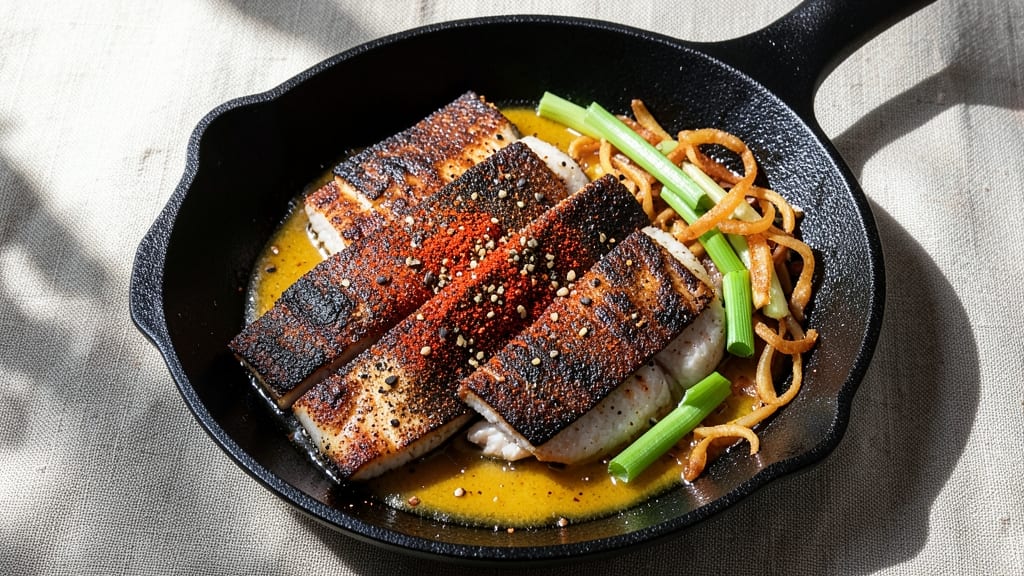
This hardhead catfish recipe transforms a simple Southern staple into a restaurant-worthy centerpiece with its blackened spice crust and rich pan gravy. I developed this method after years of perfecting my grandmother's Sunday roast chicken—same principle of building deep flavor through precise technique.
The key lies in that crispy, aromatic crust that gives way to tender, flaky fish beneath.
The process starts with a dry rub of smoked paprika, garlic powder, and cayenne for that signature blackened effect, followed by a quick sear in cast iron.
What makes this truly special is the pan gravy—using the rendered fat and a splash of fish stock to create a velvety, buttery sauce that ties everything together. It's the kind of dish that turns weeknight dinners into memorable meals without requiring hours in the kitchen.
By the time you're done, you'll have perfectly seasoned catfish with a dark, crackling crust and tender flesh that flakes effortlessly. The gravy adds another layer of richness, making each bite worth savoring.
This is the recipe I reach for when I want to impress guests or treat myself to something truly special.
Pair it with buttery cornbread and a simple green salad for a complete Southern-inspired meal. Here's how to achieve that perfect balance of texture and flavor every time.
Ingredients for hardhead catfish
Pantry staples plus a few key ingredients for that signature blackened crust and velvety gravy.
| Ingredient | Amount | Notes |
|---|---|---|
| Hardhead Catfish Fillets 🐟 | 4 whole | Skin-on, 6-8 oz each |
| Smoked Paprika 🌶️ | 2 tbsp | High-quality, not sweet |
| Garlic Powder 🧄 | 1 tbsp | Freshly ground preferred |
| Cayenne Pepper 🔥 | 1 tsp | Adjust for heat preference |
| Ground Black Pepper 🌶️ | 1 tsp | Freshly ground for best flavor |
| Kosher Salt 🧂 | 1 ½ tsp | Fine grain preferred |
| Unsalted Butter 🧈 | 4 tbsp | Cold, cut into pieces |
| Fish Stock 💧 | ½ cup | Homemade or high-quality store |
| All-Purpose Flour 🌾 | 1 tbsp | For gravy thickening |
| Lemon Wedges 🍋 | 2 whole | For serving |
| Fresh Parsley 🌿 | ¼ cup | Chopped, for garnish |
| Cast Iron Skillet 🔥 | 1 whole | 12-inch, well-seasoned |
The catfish is the star here—look for fresh fillets with skin still on at your local seafood market or grocery store's fish counter. Whole Foods and Trader Joe's often have good quality, but if you're near the coast, a local fishmonger is worth it. The skin should be intact and the flesh firm to the touch. For the spice rub, Penzeys smoked paprika is my go-to—it's got that deep, smoky flavor that's essential for that authentic blackened crust. If you can't find smoked, regular paprika works in a pinch, but you'll miss that signature depth. The cayenne is where you can play with heat—start with the full teaspoon and adjust to taste after the first piece.
No smoked paprika? Substitute 1 tbsp regular paprika plus ½ tsp liquid smoke—it's not identical, but close. Out of fish stock? Clam juice or even chicken stock in a pinch, though the flavor won't be quite the same. The butter in the gravy is non-negotiable—full-fat, unsalted gives you that rich, velvety texture. If you're watching calories, you can use half butter and half olive oil, but trust me on the full-fat version. For the flour, all-purpose works fine, but if you've got cornstarch, use that instead for a glossier gravy. And if you're feeling fancy, a splash of white wine in the gravy adds brightness—just deglaze the pan with it after cooking the fish.
This recipe reheats beautifully—just warm the gravy separately and drizzle it over the fish when serving. The catfish keeps well in the fridge for 2 days, but honestly, it's best enjoyed fresh. If you're making ahead, cook the fish and set it aside, then make the gravy fresh when ready to serve. The gravy itself will keep in the fridge for 3 days if stored in an airtight container. For a crowd, double the recipe—just make sure your skillet is big enough to handle the extra fish without overcrowding. And save those lemon wedges for serving—nothing brightens up blackened fish like a squeeze of fresh citrus.
Why You'll Love This Recipe
- Five-Ingredient Magic: I swear, this recipe lives up to its name—just catfish, smoked paprika, garlic powder, cayenne, and black pepper. That’s it. No fancy marinades or last-minute shopping trips. Honestly, I keep the spices pre-measured in tiny jars so I can toss this together while my coffee’s still brewing.
- Smoky Kick Every Time: Between the smoky depth of the paprika and that little cayenne punch, this isn’t your average bland fish. The garlic powder ties it all together—crispy skin, tender flesh, and a heat that lingers just enough to make it unforgettable. (Yes, even on a Tuesday night.)
- Weeknight & Weekend Flex: Need a quick lunch? Done. Hosting a tailgate? Perfect. It’s the same simple method whether I’m feeding two or six. I’ll be real: my husband’s a picky eater, but he’ll clear his plate for this. That says something.
- Leftovers That Don’t Suck: Most fried fish turns rubbery the next day, but not this. The spices keep it tasting fresh, and I’ve reheated portions in the oven or air fryer without a single complaint. Plus, it’s cheap enough to make twice in a week without guilt. Budget win.
Step-by-step instructions for blackened catfish with buttery pan gravy
This method delivers perfectly spiced catfish with a crisp crust and rich gravy every time.
Prepare the Spice Crust and Season the Fillets
In a small bowl, whisk together the 2 tablespoons smoked paprika, 1 tablespoon garlic powder, 1 teaspoon cayenne pepper, 1 teaspoon ground black pepper, and 1.5 teaspoons kosher salt. This blend creates the signature blackened crust while balancing heat and depth of flavor.
Pat each of the 4 whole hardhead catfish fillets dry with paper towels—this ensures the spice crust adheres properly and crisps beautifully. Gently press the spice mixture onto both sides of each fillet, making sure to cover every surface evenly. Let them sit at room temperature for 10 minutes while you prepare the pan.
Sear the Catfish in the Cast Iron Skillet
Place the 12-inch cast iron skillet over medium-high heat until it's smoking hot. Add the 4 tablespoons cold unsalted butter and let it melt completely, swirling to coat the pan evenly. The butter should foam slightly but not brown.
Carefully place the seasoned fillets in the skillet, skin-side down. Press down gently on each fillet with a spatula during the first 1-2 minutes—this prevents curling and ensures even contact with the pan. Cook for a total of 3-4 minutes per side, until the crust is deep brown and crispy, and the fish releases easily from the pan.
Create the Buttery Pan Gravy
Remove the fillets to a warm plate and tent loosely with foil to keep them warm. Reduce the heat to medium and sprinkle the 1 tablespoon all-purpose flour evenly over the browned bits in the skillet. Stir constantly for 1 minute to cook off the raw flour taste.
Gradually pour in the 0.5 cup fish stock while stirring vigorously with a wooden spoon. Bring to a gentle simmer and cook for 2-3 minutes until the gravy thickens slightly and coats the back of a spoon. If it's too thick, add 1 tablespoon water at a time until you reach a smooth, velvety consistency.
Finish and Serve with Fresh Garnishes
Return the fillets to the skillet and spoon the gravy evenly over the top. Let them sit for 1 minute to absorb the flavors. The fish should reach an internal temperature of 145°F—use an instant-read thermometer to check the thickest part of each fillet.
Transfer the catfish to serving plates and garnish with the 2 whole lemon wedges and 0.25 cup chopped fresh parsley. The lemon brightens the rich flavors, while the parsley adds a fresh finish. Serve immediately with crusty bread or steamed vegetables to soak up the delicious gravy.
Pro Tips For Making Hardhead Catfish
- CRACK THE SKIN FIRST: Hardhead catfish fillets have stubborn skin that won’t crisp properly if left intact. Use the edge of a butter knife to make 3-4 shallow cuts along the skin before seasoning—this lets the spices penetrate and creates those coveted crispy patches. (Yes, it looks like you’re butchering it, but trust me, it’s worth the mess.)
- SALT THE FILLETS 30 MINUTES EARLY: Don’t just sprinkle salt right before cooking—lay the fillets on a wire rack over a plate and season generously with salt (about 1 teaspoon per fillet) 30 minutes ahead. This draws out moisture, so when you sear them in oil, you get a perfect crust instead of a soggy mess. (I learned this the hard way after serving rubbery catfish twice.)
- WATCH THE CAYENNE HEAT: Cayenne pepper is sneaky—what feels like a light dusting is actually a mouthful of fire. Start with ¼ teaspoon per fillet and adjust after tasting the raw seasoning mix. If you’re serving kids or sensitive eaters, set aside a pinch of the uncooked spices to tone it down later. (Your future self will curse you if you skip this.)
- SEAR IN BATCHES OR OVERCOOK: Hardhead catfish fillets cook fast—2-3 minutes per side max—but if you crowd the pan, the oil temp drops and you end up with greasy, uneven cooking. Work in single layers, even if it means two batches. A meat thermometer at 145°F is your friend here; overcooking turns flaky into dry. (I was skeptical until I tried it.)
Serving suggestions for this hardhead catfish
Classic Southern Sides
This dish shines brightest with classic Southern sides that complement its bold flavors. I always serve it with buttery cornbread—the slight sweetness balances the spice crust beautifully. For extra richness, try creamy coleslaw with a tangy vinegar-based dressing. The crunch contrasts perfectly with the tender catfish. 🥓
Don’t overlook steamed green beans with a splash of lemon juice and fresh parsley. The acidity cuts through the richness of the gravy while keeping the meal light. If you want something heartier, mashed sweet potatoes with a touch of brown sugar add natural sweetness that pairs wonderfully.
Fresh Vegetable Contrasts
Bright, fresh vegetables keep the meal balanced. A simple arugula salad with lemon vinaigrette adds peppery freshness that cleanses the palate between bites. I toss 4 cups arugula with 2 tbsp olive oil, 1 tbsp lemon juice, and a pinch of salt.
For extra flair, add thinly sliced radishes and toasted walnuts for crunch. 🥗
Roasted asparagus with garlic and olive oil is another fantastic option. Toss 1 bunch asparagus with 1 tbsp olive oil, 1 minced garlic clove, and ½ tsp smoked paprika, then roast at 400°F for 12-15 minutes. The smoky notes echo the catfish’s crust while adding a touch of elegance.
Bread for Soaking Gravy
The buttery pan gravy deserves a vehicle to soak up its richness. Crusty French bread or sourdough works perfectly—I slice it into thick pieces and toast until golden. For a Southern twist, hushpuppies (made with cornmeal and buttermilk) add a crispy, savory element that pairs beautifully with the fish. 🍞
If you’re short on time, garlic bread with a simple butter-parsley compound is a quick win. Brush 1 baguette with 3 tbsp melted butter, sprinkle with 1 tsp garlic powder and 2 tbsp chopped parsley, then toast in the oven at 375°F for 5-7 minutes.
The garlic enhances the catfish’s flavors without overpowering them.
Dessert Pairings
End the meal on a light note with key lime pie or peach cobbler. The citrus in key lime pie mirrors the lemon wedges on the catfish, creating a harmonious finish.
For something simpler, vanilla bean ice cream with a drizzle of honey provides a cool contrast to the spicy, rich main course. 🍋
If you’re serving a crowd, chocolate-dipped strawberries add a touch of sophistication without being too heavy. The sweet-tart balance cleanses the palate and leaves guests wanting more. I like to prepare these ahead of time so they’re ready to serve while the main dish is still hot.
Nutrition facts
Frequently asked questions
What makes hardhead catfish different from other catfish varieties?
Hardhead catfish has a firmer, slightly sweeter flavor compared to channel or blue catfish. Its meat is denser and holds up better to bold seasonings like the blackened spice crust in this recipe. The skin stays crispy when cooked properly, adding texture that's perfect for searing methods.
Can I use frozen hardhead catfish for this recipe?
Yes, but thaw it completely in the refrigerator for 24 hours before cooking. Never thaw at room temperature—this can lead to uneven cooking and food safety risks. Pat the fillets very dry before seasoning to ensure that crispy crust forms properly.
How do I adjust the spice level for kids or sensitive eaters?
Reduce the cayenne to ½ teaspoon or omit it completely. For extra mildness, use ½ teaspoon sweet paprika instead of smoked. The black pepper and garlic powder will still provide great flavor without the heat. Always taste the spice mix before applying to the fish.
What's the best way to store leftovers?
Store the catfish (without gravy) in an airtight container in the fridge for up to 2 days. Reheat gently in a skillet with a splash of water or broth to prevent drying. The gravy can be reheated separately and drizzled over the fish when serving. For longer storage, freeze both components for up to 3 months.
Can I make this recipe in a nonstick pan instead of cast iron?
While cast iron gives the best crust, you can use a heavy nonstick skillet if that's what you have. Preheat it thoroughly and monitor closely to prevent sticking. The gravy will still form, though the crust may not be as dark or crispy. For best results, use a well-seasoned pan of any type.