
Side Dishes
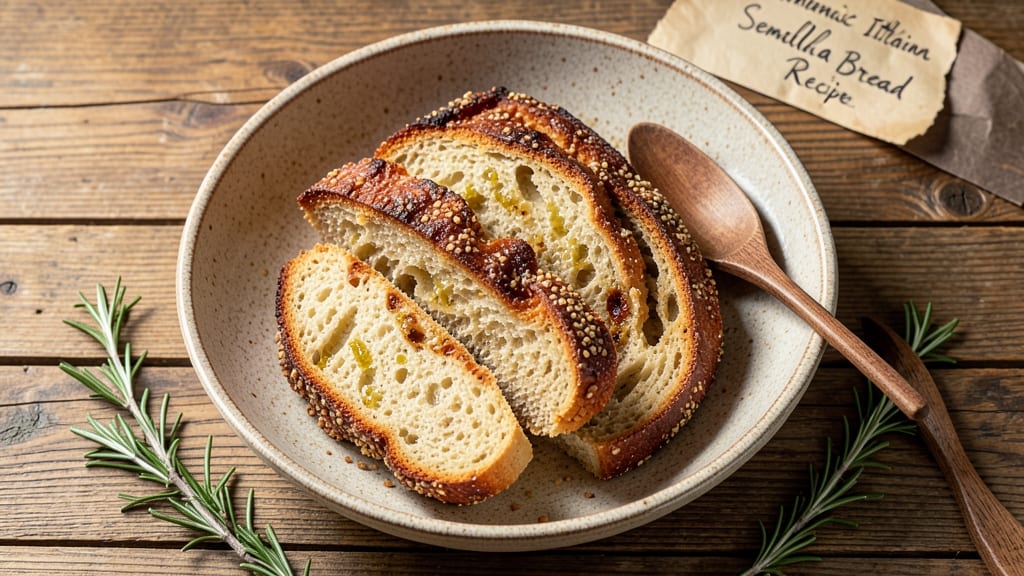
This authentic Italian semolina bread recipe brings the rustic charm of Sicilian bakeries to your kitchen, where golden crust meets a tender, almond-speckled heart. The key lies in traditional techniques—kneading high-gluten flour with coarse semolina for that signature texture, then letting it ferment slowly for depth of flavor.
I first discovered this method while traveling through southern Italy, where local bakers swore by its simplicity and bold taste. That first bite of crispy crust giving way to a soft, nutty interior? Unforgettable.
The beauty of this recipe is its foolproof approach to authenticity without shortcuts. Using 00 flour and semolina creates that iconic crunchy exterior, while almonds add a subtle sweetness that balances the bread’s rustic profile.
The dough requires active kneading (about 10 minutes) and a long fermentation (2–3 hours), but the results are worth every minute—no industrial yeast or processed ingredients here. This is bread that tastes like tradition, not a recipe.
By the time it emerges from the oven, you’ll have a crispy, golden-brown loaf with a crackly crust and a tender crumb flecked with almonds. The aroma alone—warm, toasted semolina mingling with olive oil—will have everyone at your table asking for seconds.
Perfect for pairing with soups, charcuterie, or simply enjoying with olive oil and salt, this bread is a centerpiece that elevates any meal.
For those new to Italian baking, don’t worry—this recipe includes troubleshooting tips for avoiding dense texture or cracking. Whether you’re baking for a family gathering or treating yourself to an authentic taste of Italy, this method delivers professional-quality results at home.
Let’s get started on your journey to crispy, almond-flecked perfection.
Ingredients for authentic italian semolina bread
High-gluten flour meets toasted semolina for that iconic Sicilian crunch, balanced by almonds for nutty sweetness.
| Ingredient | Amount | Notes |
|---|---|---|
| 00 Flour 🌾 | 3 cups | High-protein for structure, sifted before measuring |
| Coarse Semolina 🌾 | 1 cup | Toasted for nutty depth, not fine flour |
| Active Dry Yeast 🍞 | ¼ oz | Fresh yeast preferred, not instant |
| Granulated Sugar 🍚 | 1 tbsp | Feeds yeast, not refined white |
| Extra-Virgin Olive Oil 🫒 | ½ cup | Fruity, unfiltered for authentic flavor |
| Warm Water 💧 | 1 ¼ cups | 110°F for optimal yeast activation |
| Salt 🧂 | 1 ½ tsp | Diamond Crystal preferred, fine grain |
| Almonds 🥜 | ½ cup | Whole, toasted, skin-on preferred |
| Large Egg 🥚 | 1 whole | Room temperature for proper binding |
| Cornmeal 🌽 | ¼ cup | For dusting, not fine flour substitute |
| Coarse Sea Salt 🧂 | 2 tsp | For crust enhancement, Maldon preferred |
The 00 flour is non-negotiable—its high protein content creates the signature elastic texture. Caputo brand from Italian specialty stores delivers the most authentic results, though King Arthur Italian 00 works well for home bakers. Toast your coarse semolina in a dry skillet for 2 minutes until fragrant—this step amplifies its nutty notes. For yeast, Fleischmann's Active Dry is reliable, but fresh yeast from Italian markets adds depth. The extra-virgin olive oil should be fruity and peppery; Colavita or Bertolli are excellent choices. Measure your warm water precisely—too hot kills yeast, too cool slows activation.
No toasted semolina? Toasted whole wheat flour works in a pinch, though texture will differ slightly. Substituting almonds? Toasted hazelnuts or pecans maintain sweetness but alter crumb structure. For yeast, instant yeast at half the amount can be used if no active dry is available. The cornmeal isn't optional—it creates the signature crunchy base. If you're short on time, pre-toast the almonds and semolina while mixing the dough. For the crust, coarse sea salt is essential; table salt dissolves too quickly and won't create those dramatic crust crystals.
Store the toasted semolina and almonds in airtight containers for up to 3 months—they lose flavor when exposed to air. The yeast should be kept in the fridge and used within 3 months of opening. Once baked, this bread stays fresh for 3 days at room temperature, wrapped in a linen towel to maintain moisture. For longer storage, slice and freeze portions—reheat in a 350°F oven for 5-7 minutes to restore crispiness. The olive oil should be stored in a cool, dark place to preserve its fruity notes.
Why You'll Love This Recipe
- No-Knead Magic: I swear by this—just mix, rest, and bake. The 00 flour and semolina handle all the heavy lifting while you sip coffee and scroll. (Yes, even on a Tuesday night.)
- Crispy-Creamy Bite: That semolina crust? Chef’s kiss. It’s got this perfect crunch while the inside stays soft—like a golden hug from Nonna’s kitchen. The olive oil gives it that authentic Italian richness without tasting heavy.
- Weeknight Hero: Toss a loaf in the oven while you prep dinner, and boom—warm, fragrant bread ready to soak up pasta sauce or sop up soup. It’s my go-to when I’m too tired for fancy bread-making.
- Pantry Staple Gold: A few cups of flour, a pinch of yeast, and you’re set. It keeps for days (freeze slices for toast later!) and costs next to nothing. Honestly, why buy store bread when this tastes 10x better?
Step-by-step instructions for authentic Italian semolina bread
Mastering this traditional technique delivers a rustic loaf with signature crisp crust and almond-infused crumb.
Prepare the Dough Base
In a large mixing bowl, combine the 3 cups 00 flour and 1 cup coarse semolina. Sift this mixture together to aerate the flour and create a fine, even texture. This blend gives the bread its characteristic crisp crust while maintaining a tender interior. Add the 0.25 oz active dry yeast and 1 tbsp granulated sugar, then whisk gently to distribute the yeast evenly throughout the dry ingredients.
Create a well in the center and pour in the 0.5 cup extra-virgin olive oil and 1.25 cups warm water (around 110°F). The olive oil not only adds flavor but also helps create a tender crumb. Sprinkle the 1.5 tsp salt over the liquid ingredients. Using a wooden spoon or your hands, gradually incorporate the dry ingredients into the wet until a shaggy dough forms. The dough should be sticky but manageable—this is normal for a rustic bread.
Develop the Dough Through Kneading
Transfer the dough to a lightly floured surface and begin kneading for about 10 minutes. I prefer to use the "fold and turn" method: stretch the dough away from you, fold it over itself, and rotate the bowl a quarter turn. This technique builds gluten without overworking the dough. You'll know it's ready when the dough becomes smooth, elastic, and springs back slowly when poked.
Return the dough to the bowl, cover it with a damp towel, and let it rise in a warm place for 1 to 1.5 hours, or until it has nearly doubled in size. The warm environment helps activate the yeast, and the towel prevents the dough from drying out. I like to place the bowl on top of my turned-off oven with the light on for consistent warmth. During this time, the dough should puff up noticeably and develop small bubbles on the surface.
Incorporate Almonds and Final Rise
Once the dough has risen, transfer it back to the floured surface and gently press it down to deflate. Add the 0.5 cup whole almonds and the 1 whole large egg to the center of the dough. Using your hands, work the egg into the dough and fold in the almonds evenly. The almonds should be distributed throughout without clustering—this ensures each bite has that signature nutty flavor.
Shape the dough into a round loaf by pulling the edges toward the center and tucking them under. Place the loaf seam-side down in a lightly oiled bowl, cover it again, and let it rise for an additional 30 to 45 minutes. This second rise allows the dough to relax and develop flavor. The loaf should rise noticeably but not double in size again—it should maintain its shape while puffing slightly.
Create the Signature Crust
Preheat your oven to 375°F. While the oven heats, prepare a baking sheet by sprinkling 0.25 cup cornmeal evenly over it. This creates a textured base that prevents sticking and enhances the bread's rustic appearance. Transfer the risen loaf to the prepared baking sheet, then brush the top with a little extra extra-virgin olive oil. Sprinkle the 2 tsp coarse sea salt evenly over the top—this not only adds flavor but also helps create that coveted crisp crust.
Bake the bread for 30 to 35 minutes, or until the crust is deep golden brown and sounds hollow when tapped on the bottom. The interior temperature should reach 190°F at the center. During the last 5 minutes of baking, you may want to increase the oven temperature to 400°F to intensify the crust color. The bread is done when it pulls away slightly from the sides of the baking sheet and has a crisp, crackly exterior.
Rest and Serve
Remove the bread from the oven and transfer it to a wire rack to cool completely. This resting period, about 1 hour, allows the internal structure to set and the flavors to meld. The bread will continue to crisp up as it cools, developing that perfect contrast between the crisp exterior and tender interior. Once cooled, slice the bread with a serrated knife for clean cuts that showcase the almond flecks throughout.
Serve the bread warm or at room temperature. The crisp crust should shatter slightly when broken, while the interior remains soft and slightly chewy. Pair it with olive oil and balsamic vinegar for dipping, or use it to accompany soups and salads. The almonds add a delightful crunch and nutty depth that makes this bread truly special.
Pro Tips For Making Authentic Italian Semolina Bread
- Toast the Semolina: Heat that coarse semolina in a dry pan for 2-3 minutes until it smells nutty and golden—this banishes the raw flour taste and gives your bread that proper Italian crunch. I used to skip this, and the texture always felt off.
- Hydrate the Yeast Properly: Mix the yeast with warm water (not hot) and a pinch of sugar, then let it sit for 5-10 minutes until foamy before adding it to the dough. Cold water kills it, and skipping the foam test means uneven rising.
- Knead Until Silky: The dough should pull clean from the bowl and stretch without tearing—aim for 8-10 minutes by hand or 5-6 on a stand mixer with a dough hook. Under-kneaded dough makes dense bread; over-kneaded turns it tough.
- Steam the Pan: Brush the baking pan with olive oil and add a thin layer of water before baking—this creates steam for a crisp crust and prevents sticking. I learned this after wrestling with bread that came out gummy instead of crackly.
Perfect pairings for this dish
Olive Oil Drizzle
Drizzle extra-virgin olive oil—like Colavita or Bertolli—over warm slices for an instant upgrade. The fruity, peppery notes complement the bread’s nutty almonds and toasted semolina. I like to use a small ceramic bowl with a spoon for elegant drizzling at the table. 🫒
Balsamic Glaze
Pair with aged balsamic vinegar (look for San Marzano or Barilla) reduced to a syrupy consistency. The tangy sweetness cuts through the bread’s richness, creating a perfect balance. Warm the glaze gently in a saucepan for 3-5 minutes until thickened. A light drizzle elevates simple meals to restaurant-worthy.
Italian Cheese Board
Create a Sicilian-inspired board with pecorino romano, aged provolone, and fresh mozzarella. The sharp, salty cheeses contrast beautifully with the bread’s sweet almonds. Add cured olives (like Gaeta) and prosciutto for a charcuterie experience that feels authentic. 🧀
Tomato & Basil
Serve with San Marzano tomatoes sliced and drizzled with olive oil, topped with fresh basil. The bright acidity refreshes the palate after each bite. For extra flair, add a pinch of flaky sea salt and a sprinkle of red pepper flakes.
This combo is a staple in Italian trattorias.
Prosciutto Wrap
Wrap a slice around thinly sliced prosciutto and arugula for a no-cook appetizer. The salty prosciutto pairs perfectly with the bread’s nutty crumb. Roll tightly and slice into pinwheels for an elegant bite. This is a classic Italian antipasto technique that never fails. 🥖
Sweet Pairings
For dessert, serve with ricotta cheese sweetened with honey and sprinkled with toasted pistachios. The creamy texture and nutty crunch mirror the bread’s flavors. Alternatively, pair with dark chocolate (70% cocoa) for a sophisticated contrast. 🍫
Nutrition facts
Frequently asked questions
Why does this recipe use both 00 flour and semolina?
The 00 flour provides the elastic structure needed for a light crumb, while the toasted semolina creates that signature crisp crust. The semolina also adds nutty depth that pairs perfectly with the almonds. This combination is traditional in Sicilian and Puglian baking styles.
Can I make this bread without almonds?
Yes, but the flavor profile will change. Replace almonds with toasted hazelnuts or walnuts for similar texture, or omit entirely for a simpler version. The semolina and olive oil will still deliver that authentic Italian taste.
How do I fix dense or gummy bread?
Dense bread usually means underproofed dough or overkneading. Next time, let the dough rise until it nearly doubles in size and avoid kneading more than 10 minutes. Also ensure your yeast is fresh and your water is 110°F—too hot kills yeast, too cool slows fermentation.
Is there a quicker version of this recipe?
For a faster method, use instant yeast (½ tsp) and reduce the first rise to 45 minutes. Skip the second rise and bake immediately. While not traditional, this still yields delicious bread. The texture will be slightly less rustic but still flavorful.
How should I store leftover bread?
Wrap cooled bread in a linen towel to maintain moisture for up to 3 days at room temperature. For longer storage, slice and freeze portions. Reheat frozen slices in a 350°F oven for 5-7 minutes to restore crispiness.